2017 February Meeting Notes

February 17, 2017 McKinstry Meeting
Theme: South of the Border/South America
Program: Using washes, Mike Hanlon

Notes by Paul Gasiorowski and The Tick

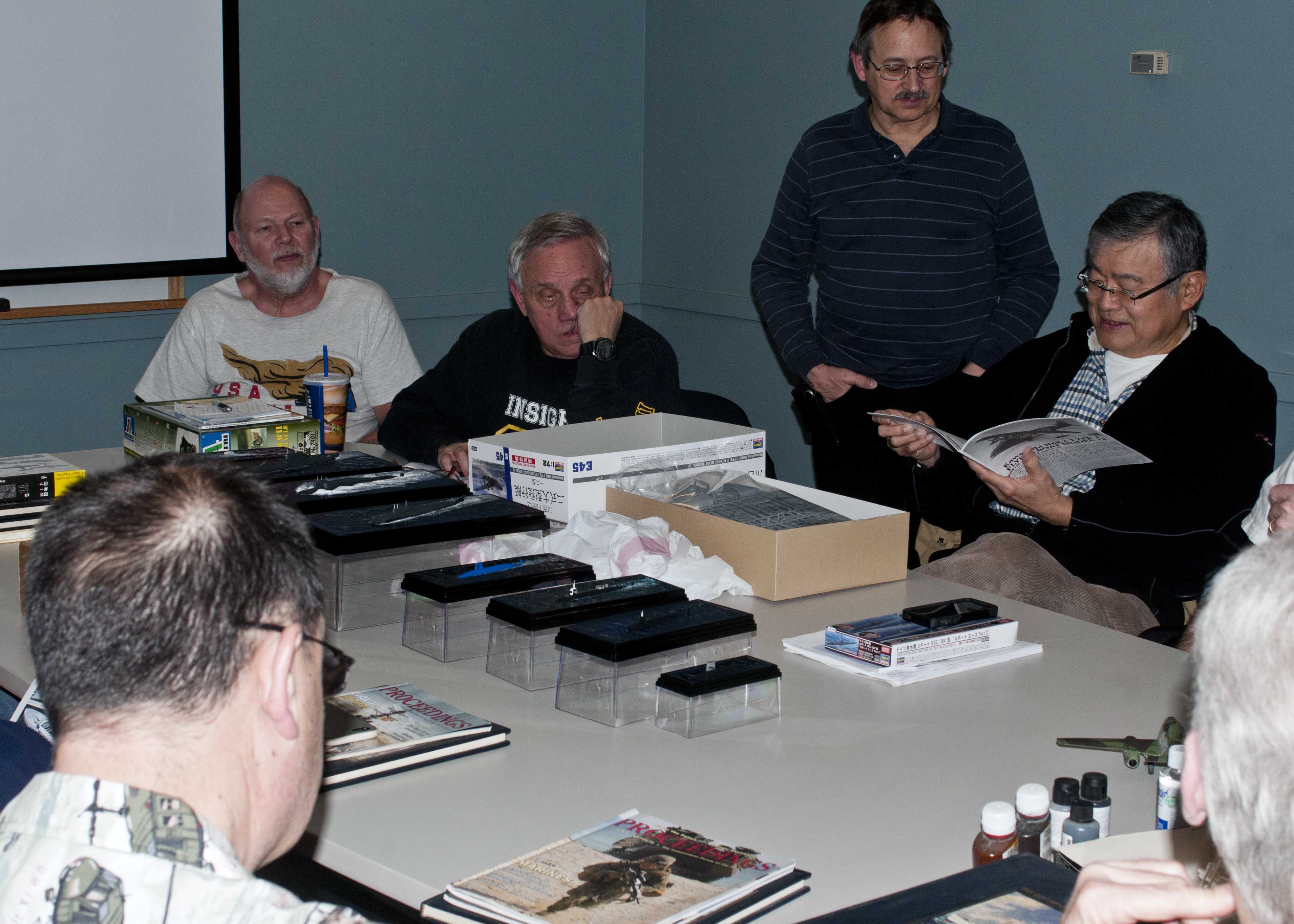
Attendees were: Paul Gasiorowski, THE TICK, Mike Hanlon, Lee Lygiros, Charlie Scardon, Bill Soppet, Dan Paulien, Steve Kumamoto, Frank Ress, Jim Batchelder, Brian Gardner, Mark Murray, and Carl Geiger

The meeting was held back in conference room I. With just 13 members attending in February, It is apparent that this room is a bit tight for our needs. After talking to the library, we seem to be stuck with just this option for now. It might be time to look for another option after meeting in this library since 1982.

Charlie’s suggestion last month that we theme the August meeting for the 75th anniversary of the Guadalcanal landings led Frank to suggest that we have dual-track themes for our meetings the next few years. We could continue both our usual eclectic themes and a WWII 75th theme each month, in observation of the events of WWII.  Frank agreed to come up with a list of candidate themes for WWII.

Program: Using washes, Mike Hanlon

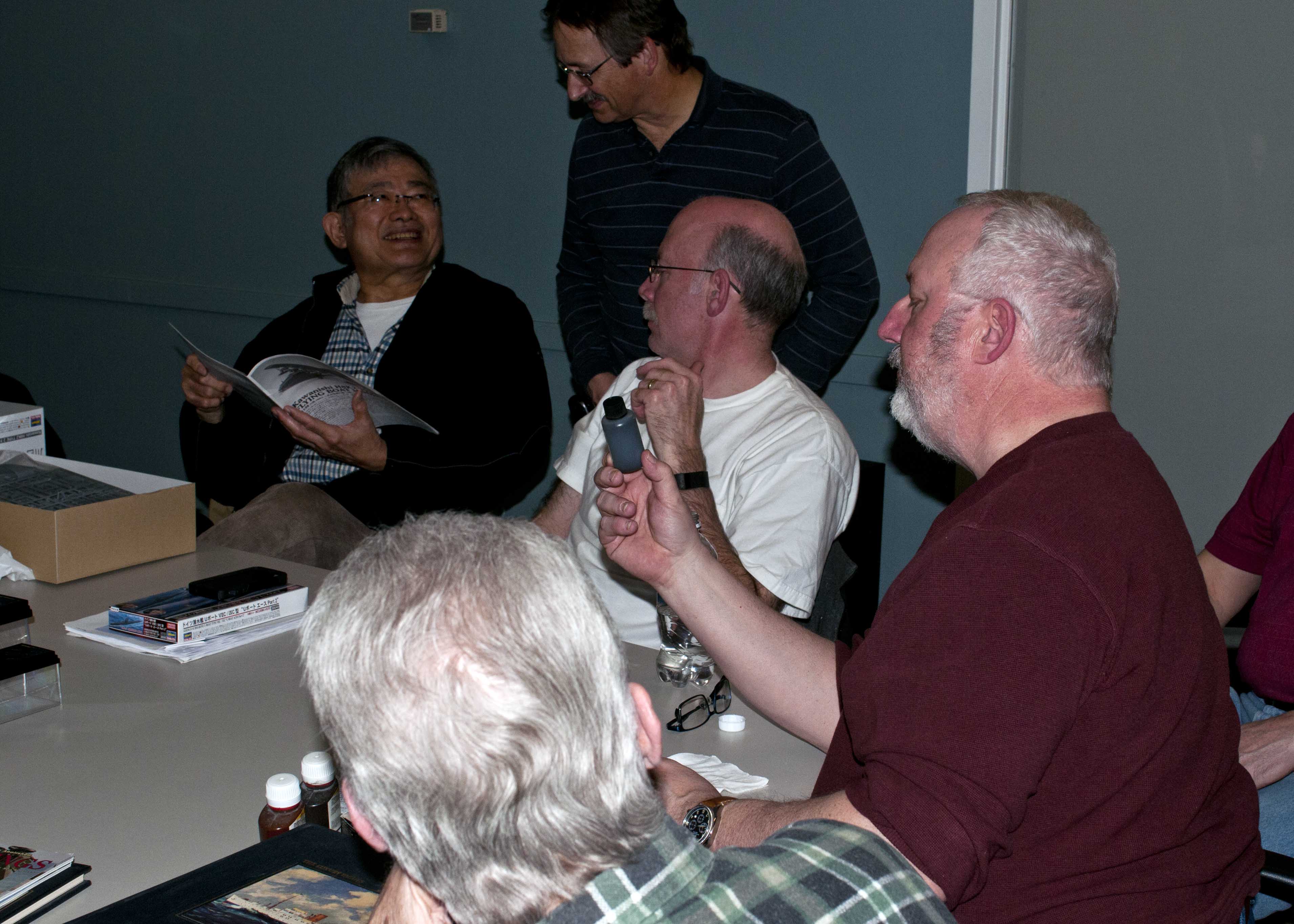
Mike Hanlon demo’d his weathering/wash technique as applied to his Tamiya Me 262.
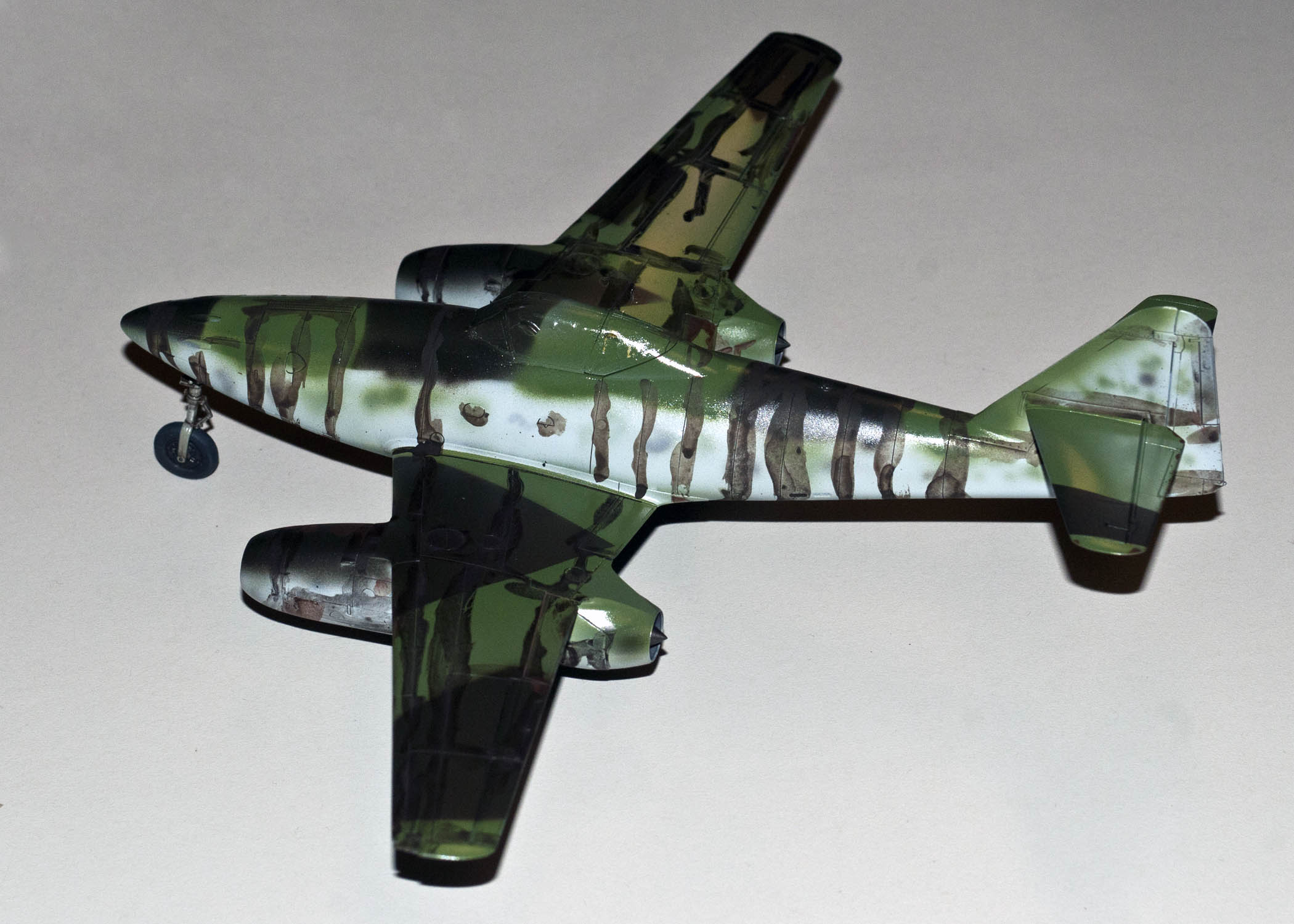
1/48th Scale Tamiya Me-262-A1 WIP: RLM81 Braunviolet, RLM 82 Lt Green over RLM 76 Blue Gray. RLM 81 and RLM 76 mixed from Tamiya paints/RLM 82 Gunze Sangyo H422 Lt Green.
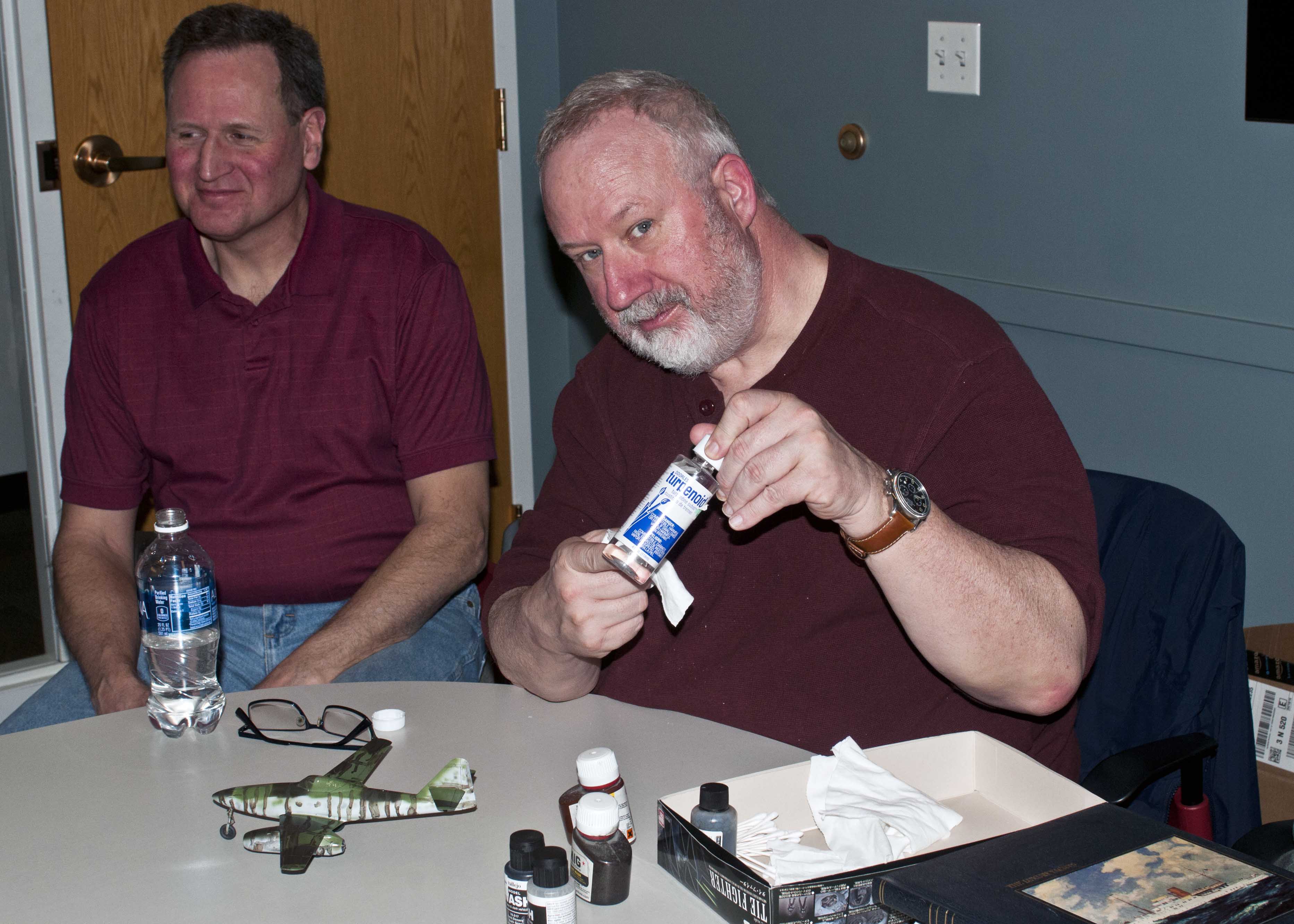
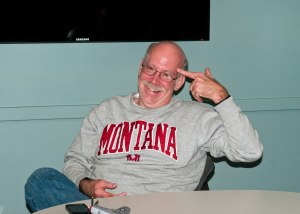
Mike looks confident and knowledgeable. Carl looks at something else – but at least he’s color coordinated.

Wash on wings, Mig Dark Wash an enamel wash removed with odorless mineral spirits (Turpenoid) Advantages: Capable of creating streaks and stains. Disadvantages: Slow drying time, must be applied over an acrylic barrier if using enamel paints.
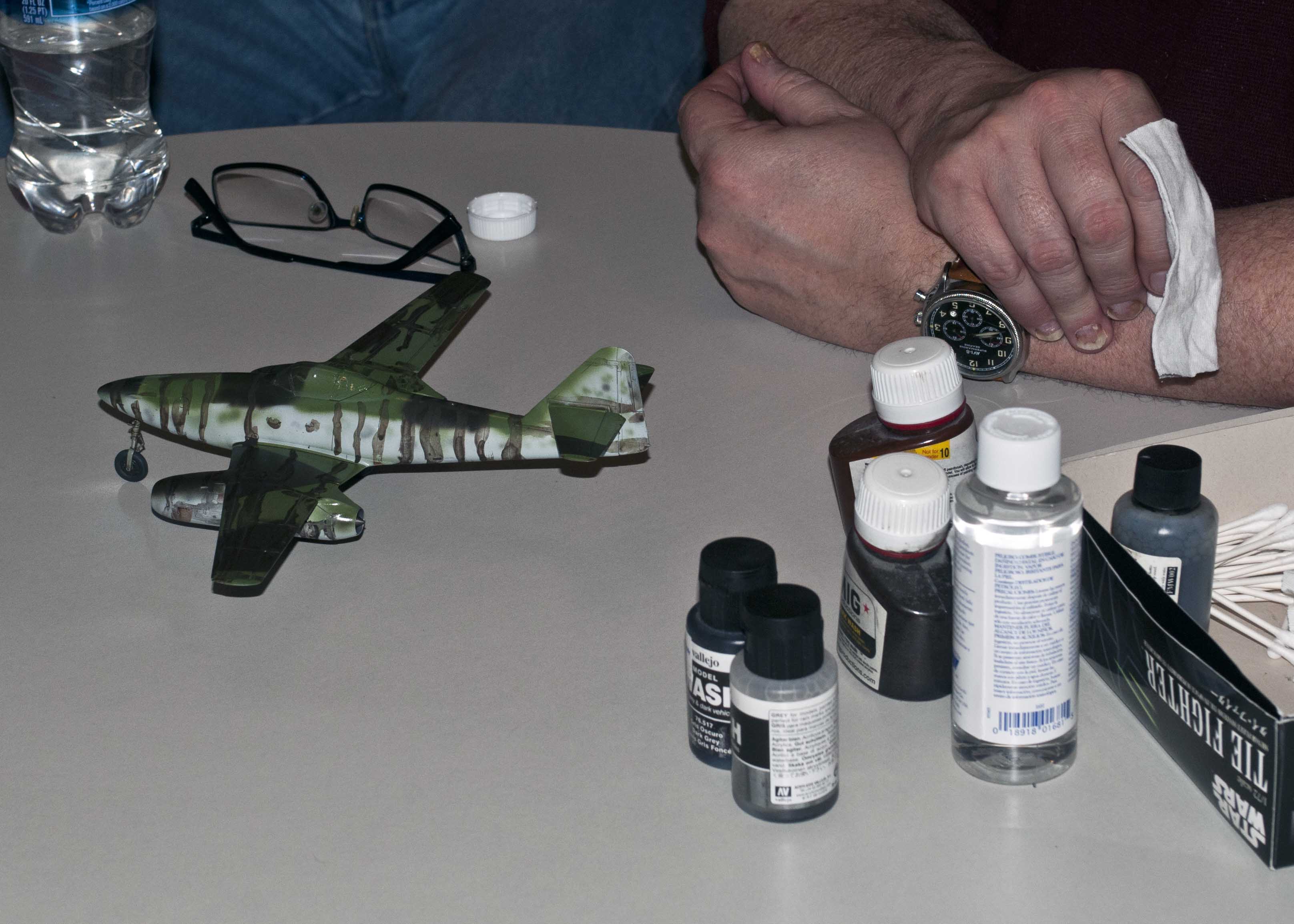
Wash on fuselage: Flory Models Dark Dirt Wash, a water based clay wash. Advantages: Very quick drying time; doesn’t damage underlying paint, removed with water. Dis-advantages: Can’t really be used to create the streaking effects possible with enamel or oil washes.
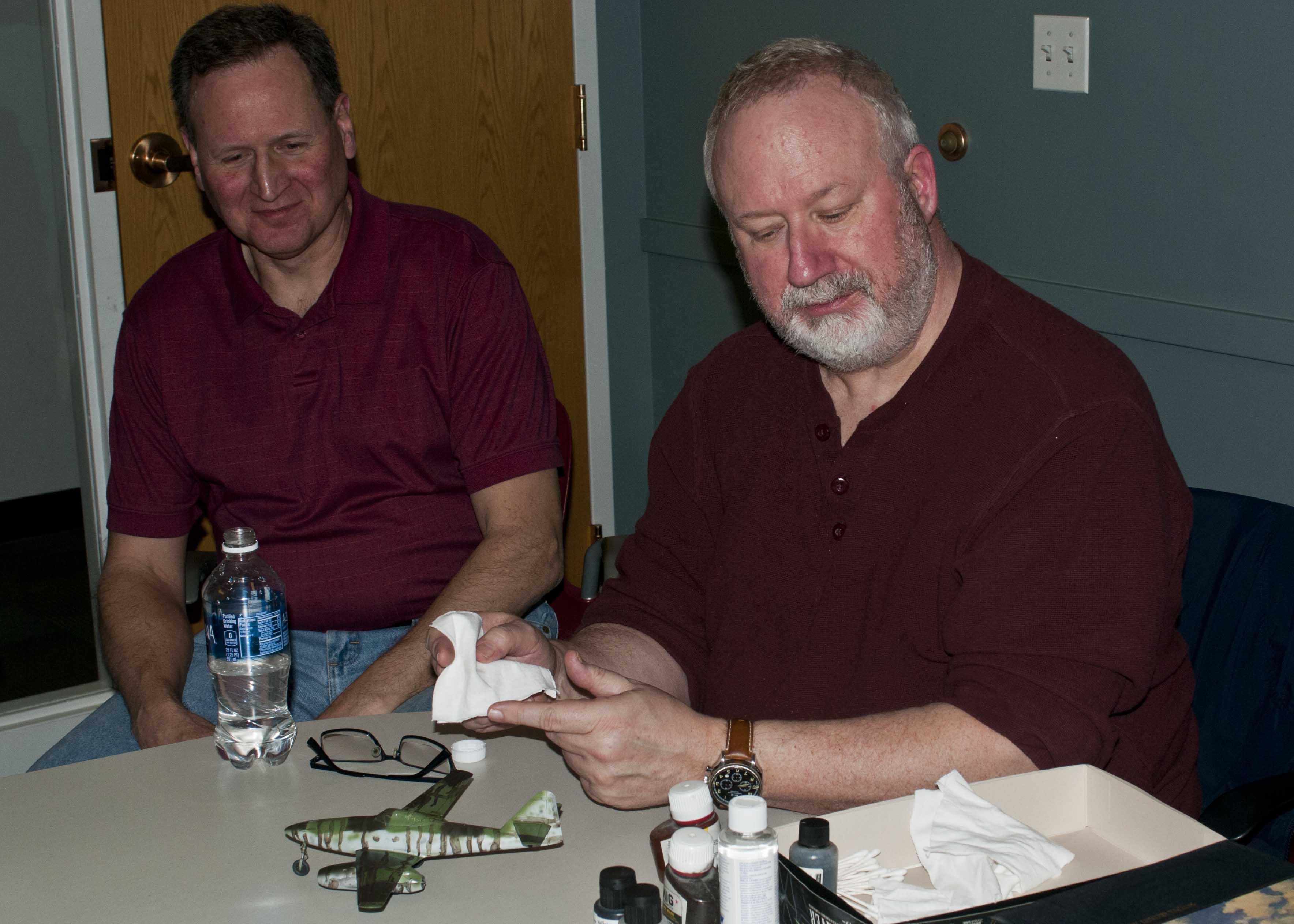
Mike working without his glasses…

Theme: South of the Border/South America

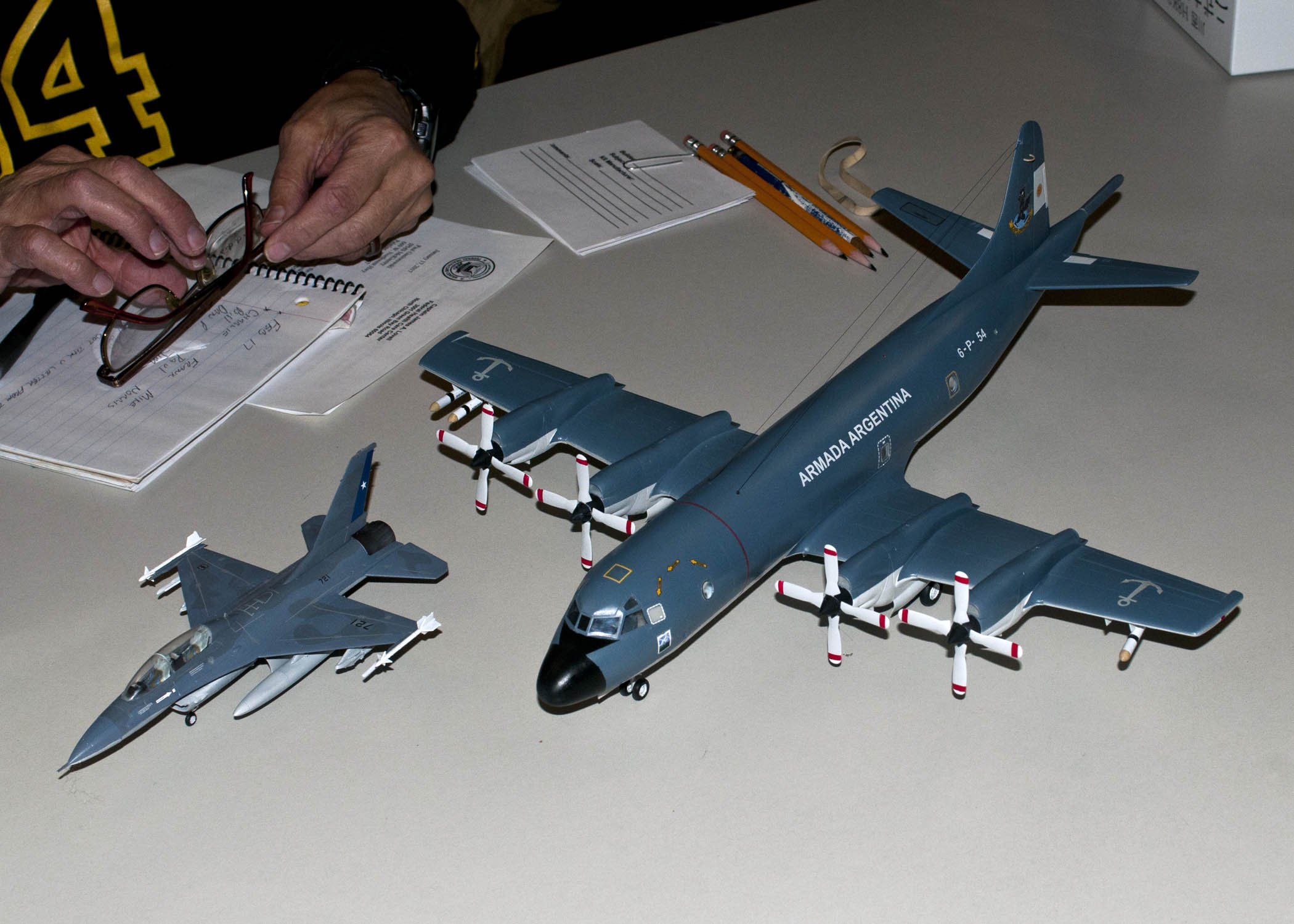
F-16B, 1/72nd, Hobbyboss, built by Paul Gasiorowski
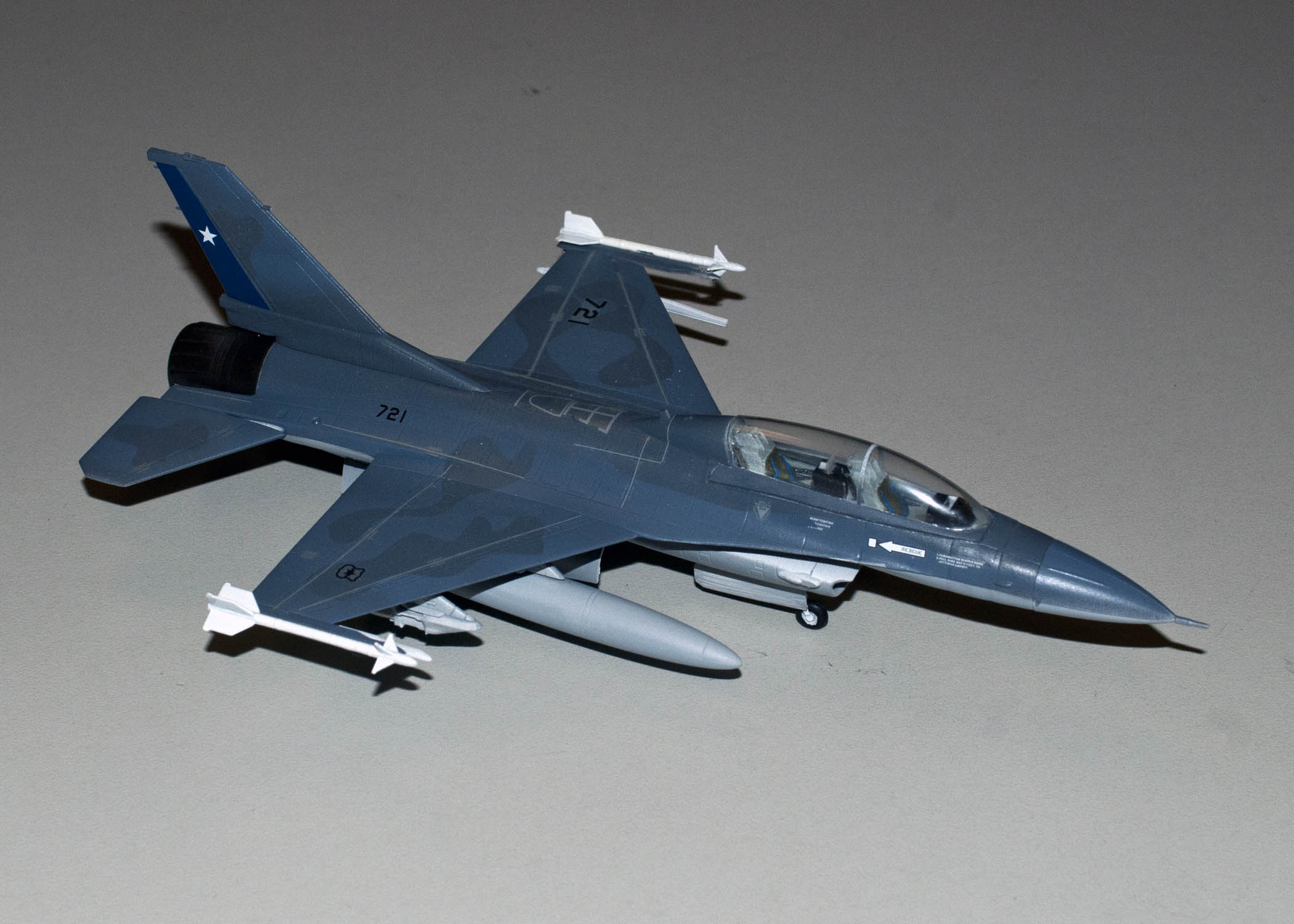
The kit went together quite well. Seams at the fuselage/wing joint were almost non-existent. Paints used were Model Master Acrylics, dark seagGrey and blue grey upper fuselage and light gull grey lower fuselage. Decals sheet was from Zotz, which included markings for Netherlands, Norway, Jordan Italy, U.A.E., Singapore, Thailand and Indonesia.

This was a 2 seat version of the F-16 used by Fuerza Aerea Chile. No squadron/unit/group  was given, but a guess based on tail serial would be Grupo no.3 at los Condores, AB. WHY isn’t this info on the decal instructions???

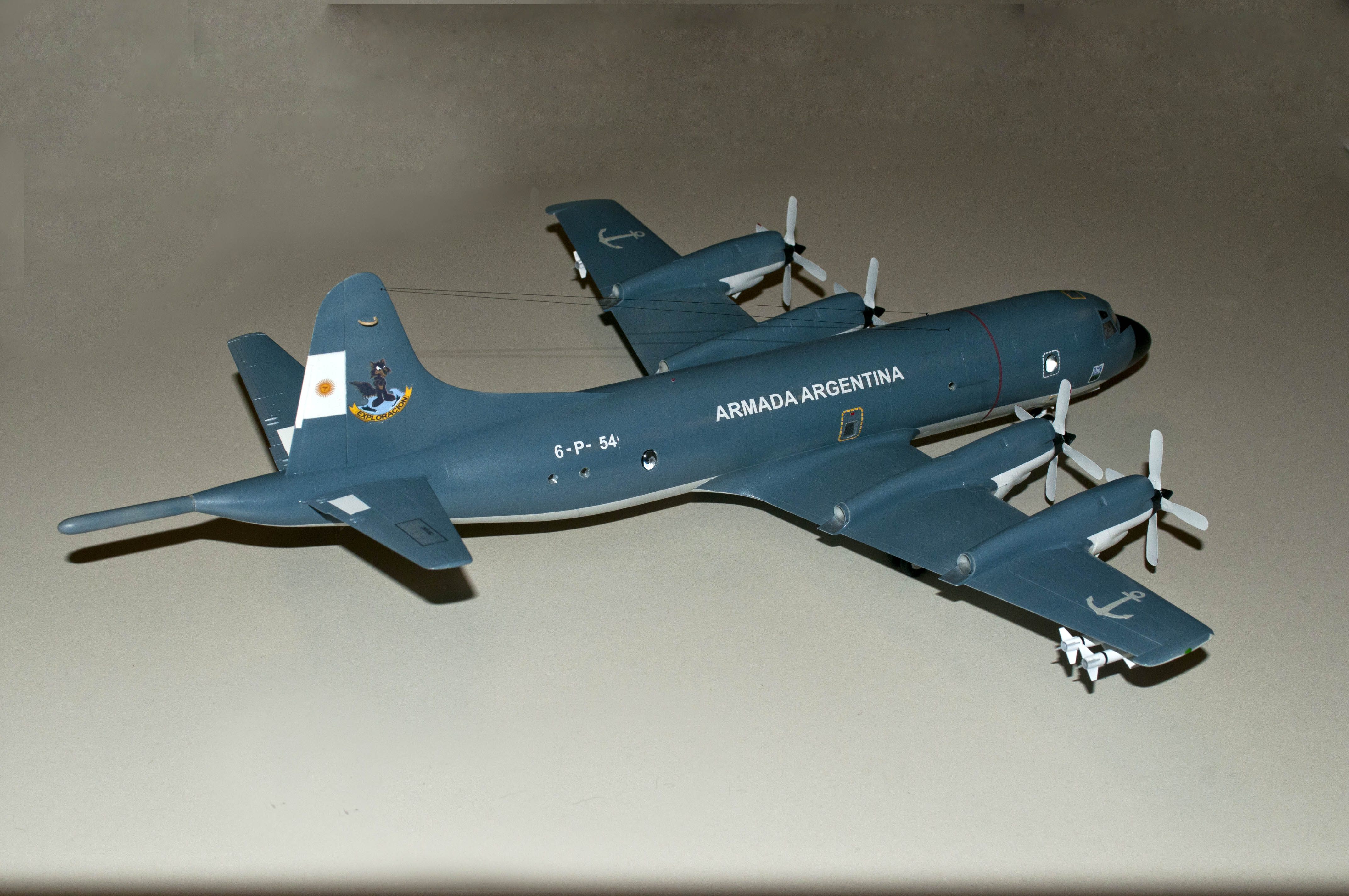
P-3B Orion, 1/72nd, Minicraft (Hasegawa), built by Paul Gasiorowski
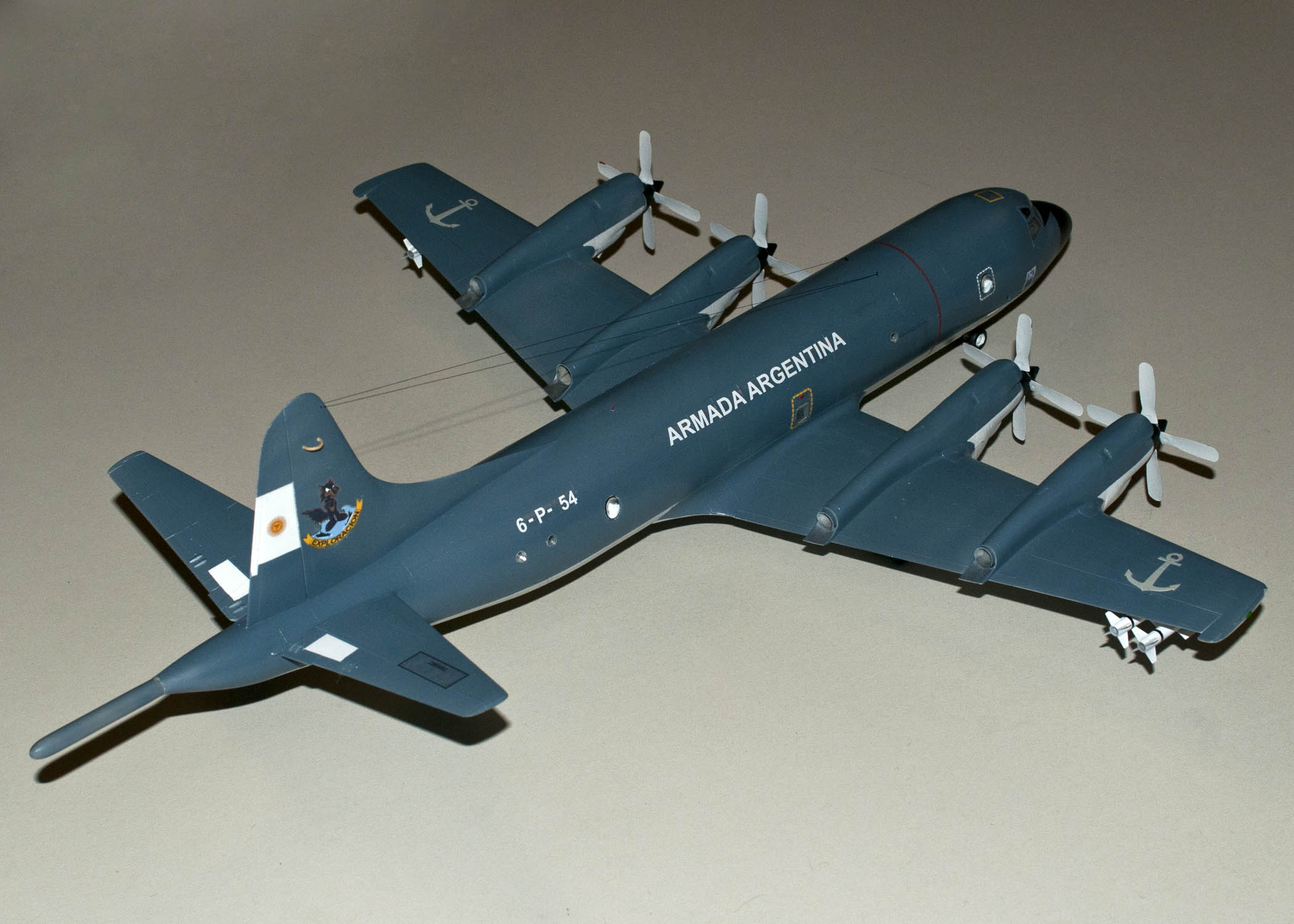
A partial build that Dick Smith gave to Paul when he was moving to Arizona. (Amazing. Dick still has the 1st penny he got for shoveling the side alk back in 1902!!) It sat on the shelf for several years before Paul decided to finish the model.

Finishing the kit was quite easy. Masking of the nacelles took some time. Model Master Acrylics: intermediate blue and sea gray. Fortunately decals were found in Australia to meet the south of the border theme. Markings are from a DEKL’S decal release for a Chilean P-3B. Markings for Escuadrilla Aeronaval de Exploración EA6E. (Exploration naval Sq).

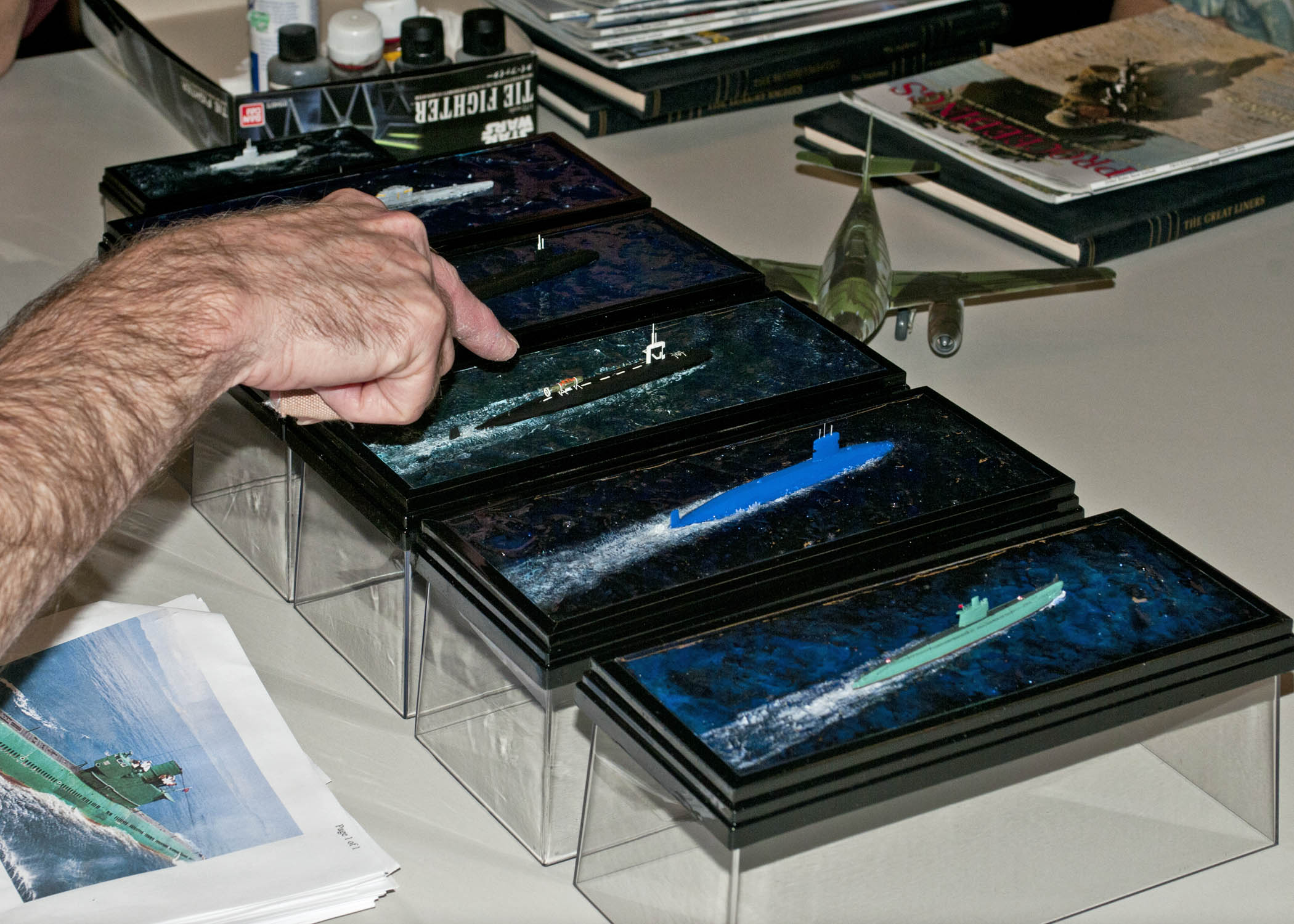
Crazy Charlie and his undersea fleet

Yep. That’s right… back again from the November meeting when he faked his own death.

Charlie’s been a busy boy this past month, playing with acrylics and Hydrocal 105. The result is he has finished 10 subs. And here we go… take it away Crazy Charlie.

“I made all the bases in my usual way. They are AMT car cases with a 1/4 x 1/4 square tube frame. I used Hydrocal 105 to make the water. Acrylic paints were used to color the water. I used Liquitex medium gel and high gloss varnish to over coat the paint and add swells along the hull. I experimented a bit with the Hydrocal to create the large swells on the Delta III kit and the results were good.”

U-3504 Type XXI U-boat, 1/700th, Skywave, built by Charlie Scardon
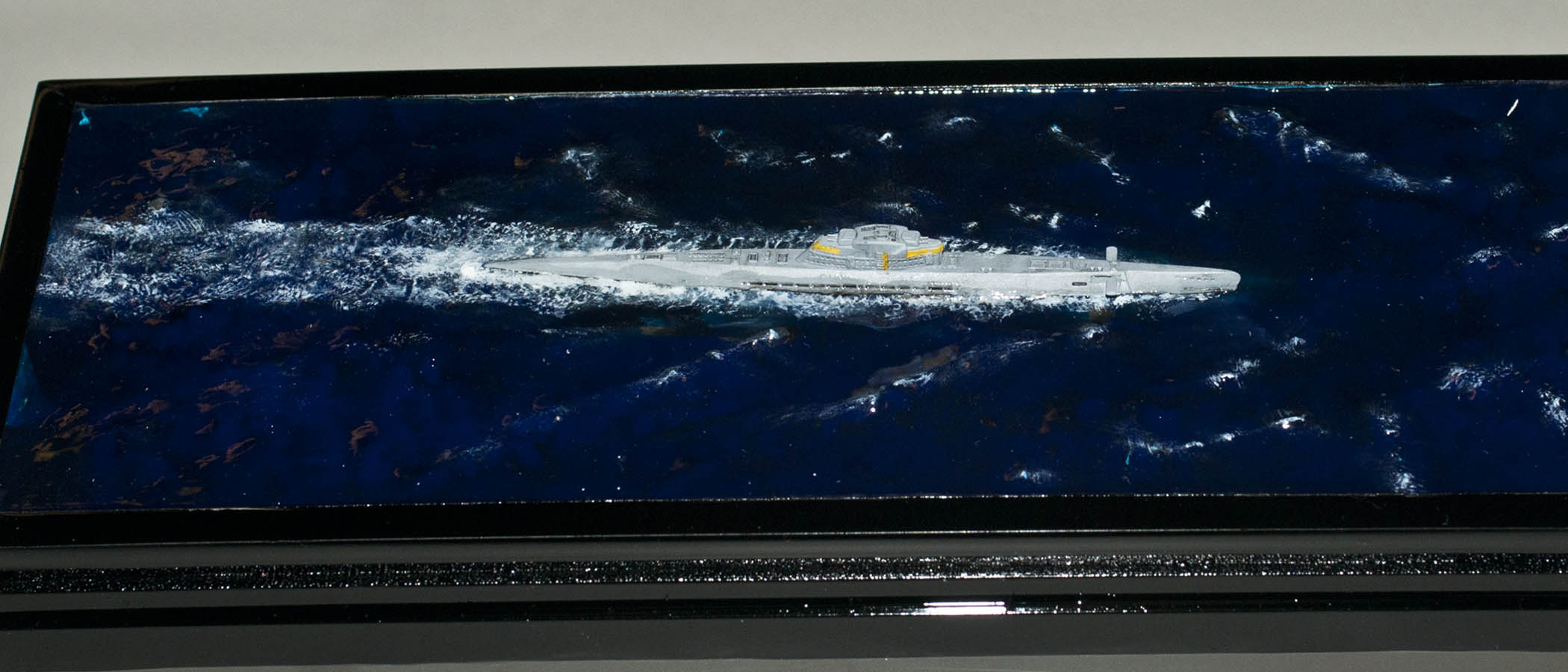
Model Master hellgrau 50 naval color with Vallejo yellow. Charlie added a black wash to emphasize the limber hole on the hull and replaced the oversized 20mm guns with .010 brass rod.

U-2338 Type XXIII U-boat, 1/700th, Skywave, built by Charlie Scardon
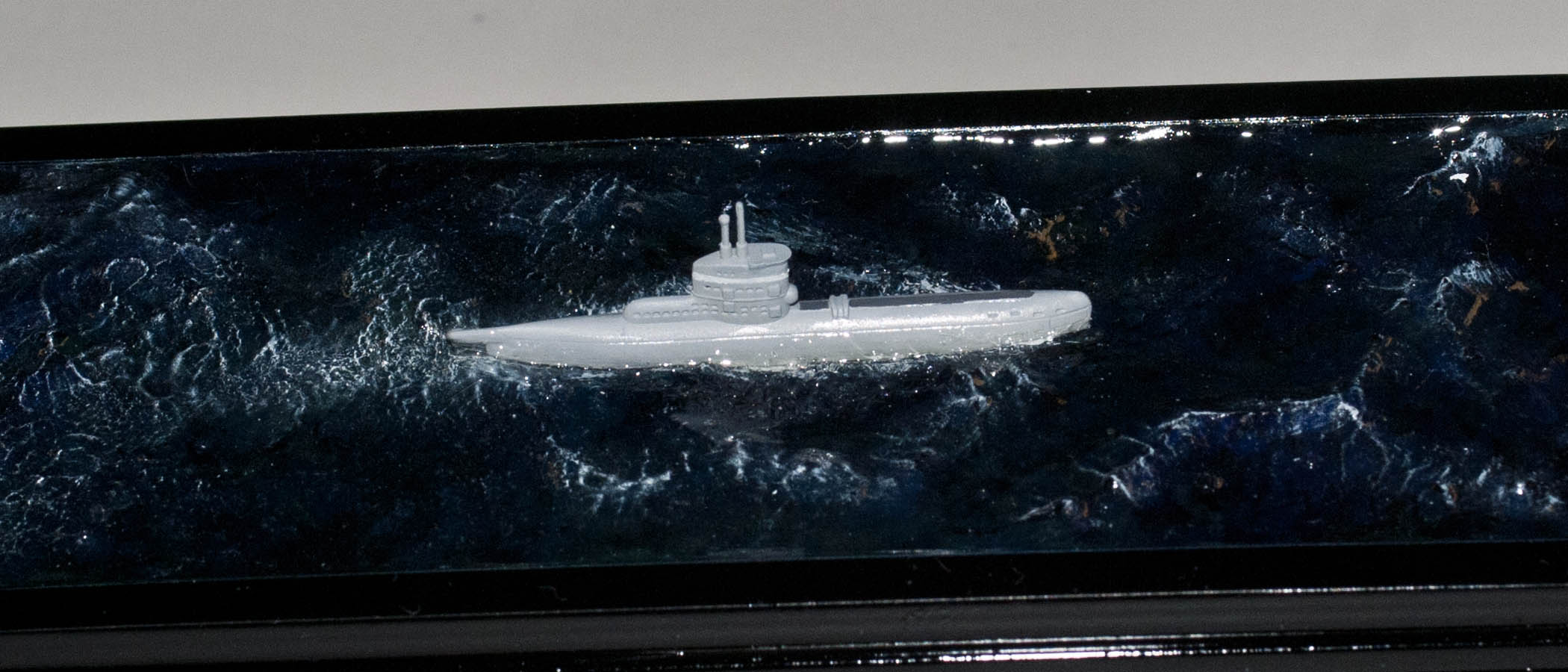
Model Master hellgrau 50 naval color with white stripe.

Soviet Oscar II, 1/700th, DML, built by Charlie Scardon
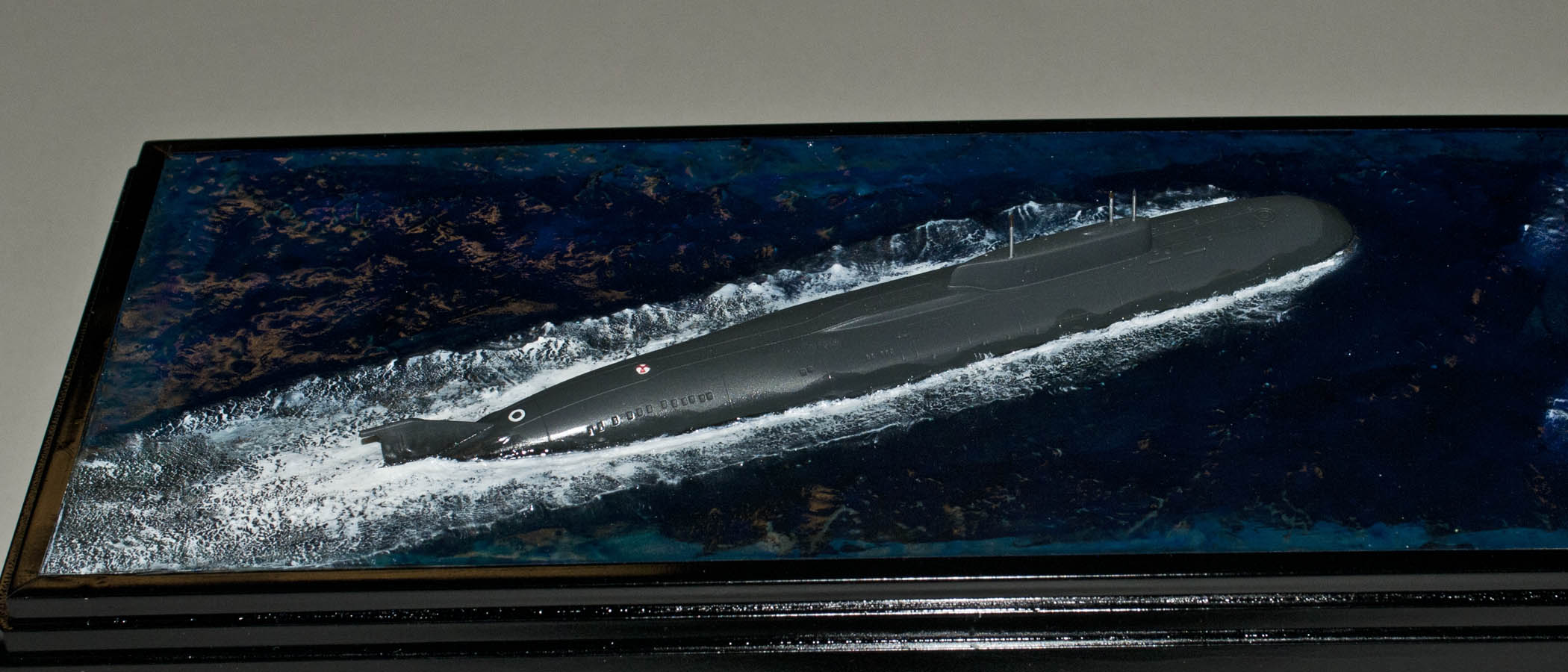
Floquil grimy black. Decals from kit.

Soviet Delta III, 1/700th, DML, built by Charlie Scardon
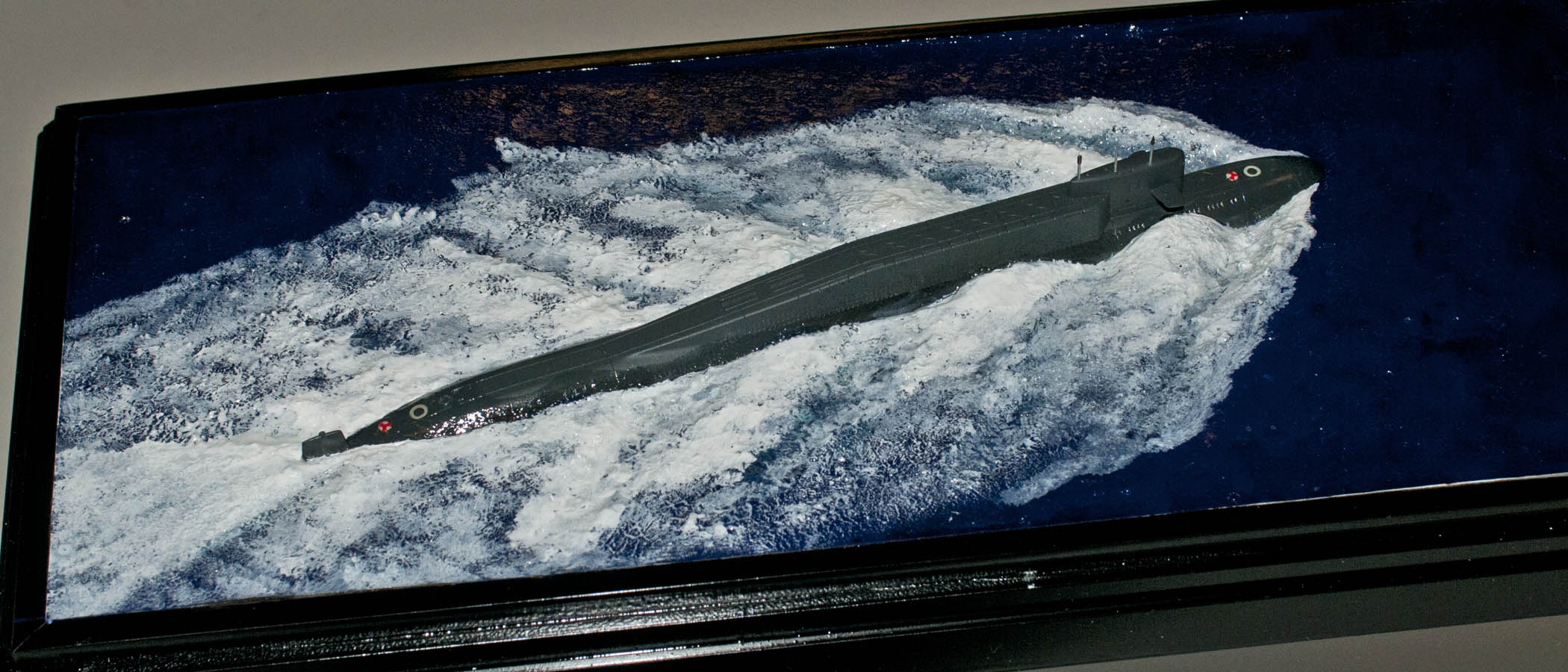
Floquil grimy black. Decals from kit.

Soviet Typhoon, 1/700th, DML, built by Charlie Scardon
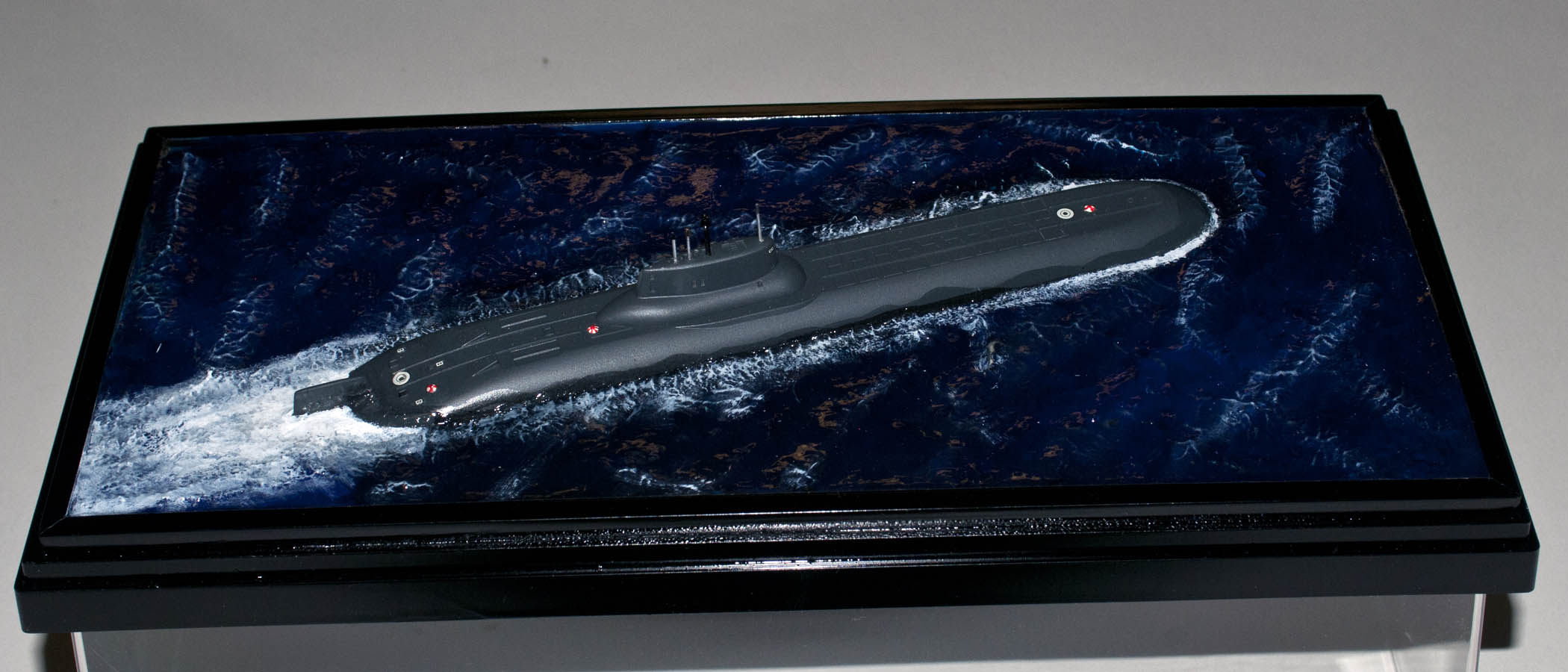
Floquil grimy black. Decals from kit.

North Korean Romeo, 1/700th, Hobby Boss, built by Charlie Scardon
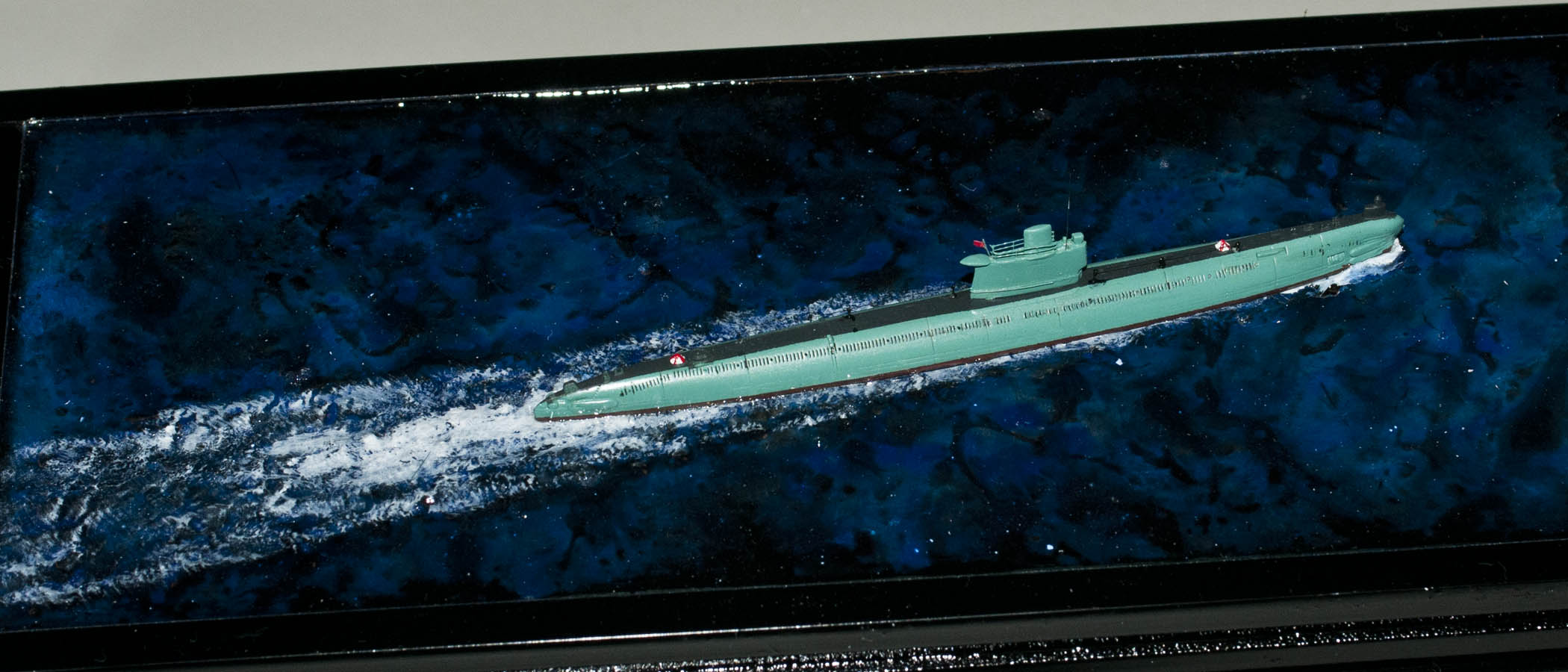
Hull is Soviet interior blue/green with Floquil weathered black deck. I added a wash to emphasize the limber holes on the hull. The railings were from some unknown PE sheet.

HMS Torbay, 1/700th, Arii, built by Charlie Scardon
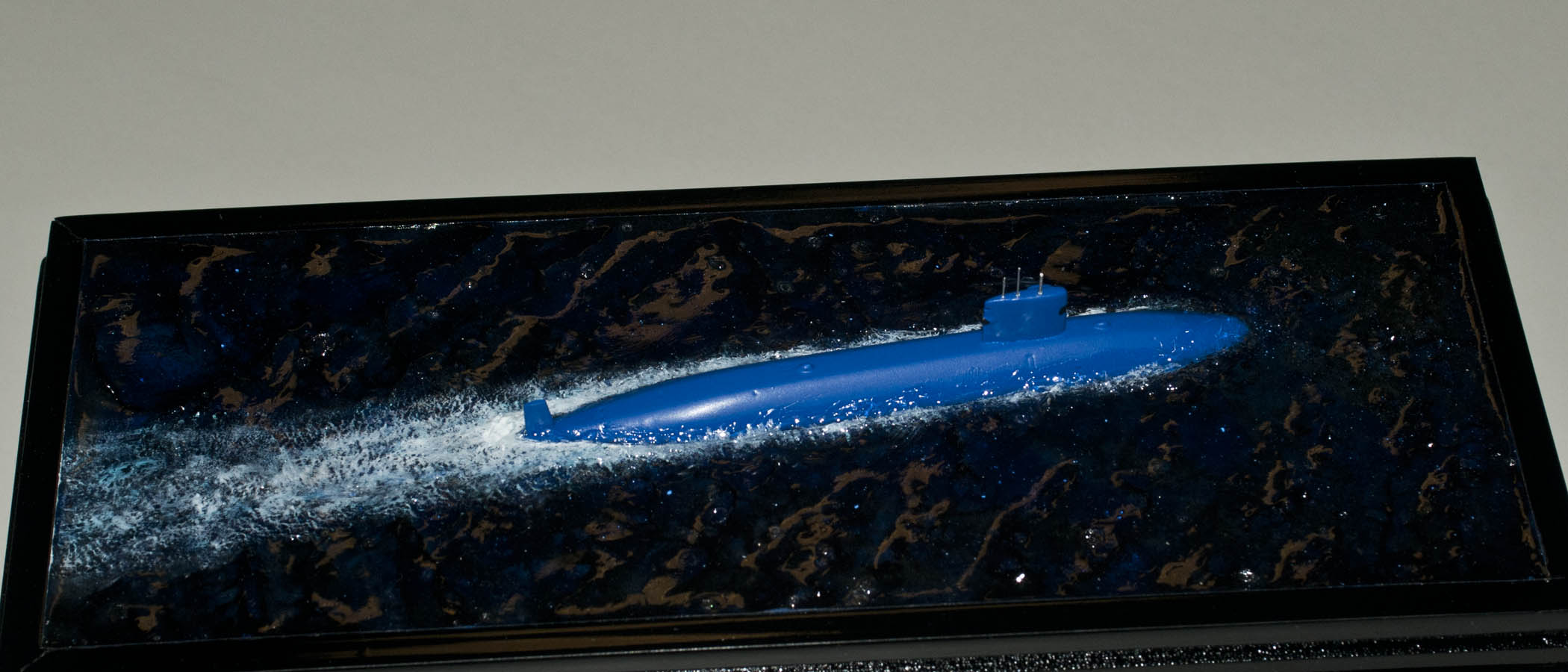
A real pig of a kit. Panel lines were filled with .020 plastic rod and MEK. Makes Johan kits look finessed. Sail altered by adding some kind of array (purpose unknown) on the port side. Hey, Norris – you photographed the wrong side! It was made out of styrene rod and quarter round stripes. It was made to resemble photos I found on the internet. The paint is Vallejo 70.965 Prussian blue.

USS Pintado w/ DSRV Mystic, 1/700th, JAG, built by Charlie Scardon
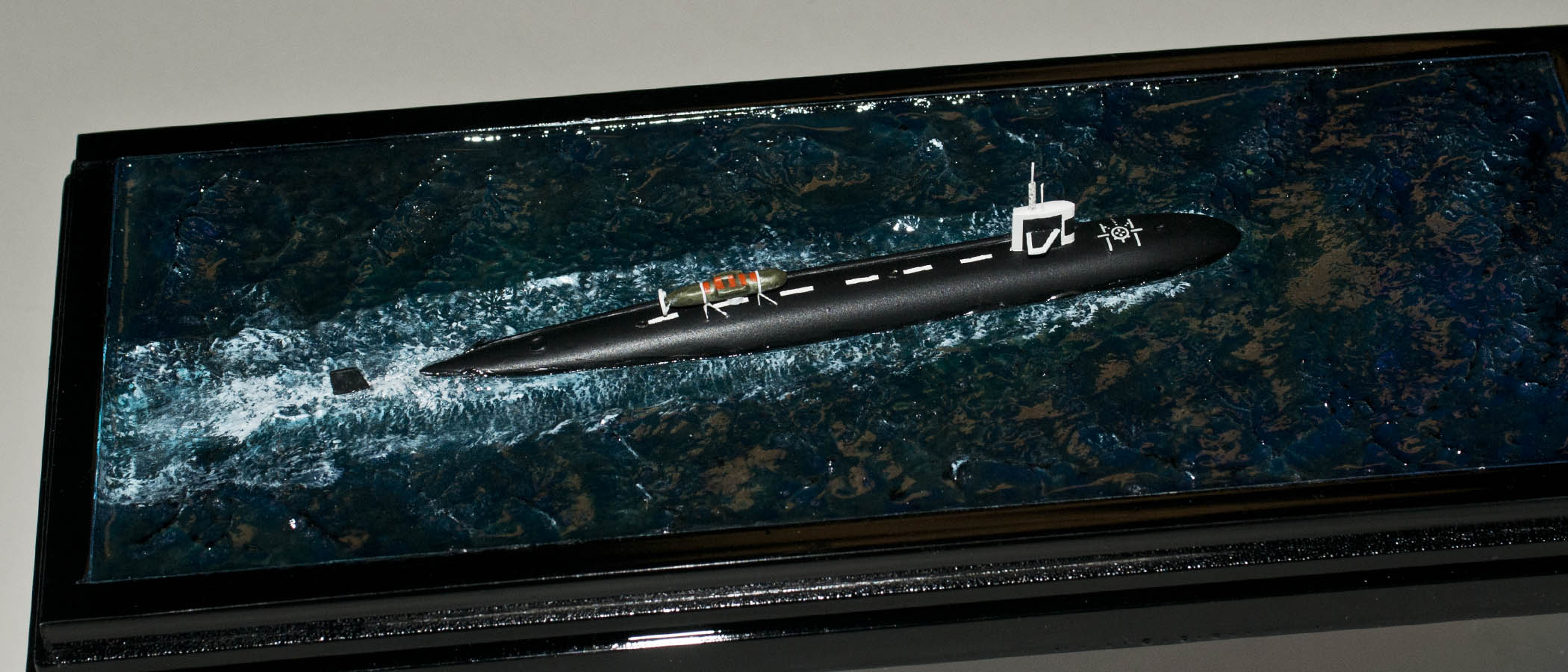
Added periscope and sensor to sail. Periscope was made from a tear shaped strut from a WW1 aircraft. DSRV was modified by removing the solid disc that represented the propeller and guard. It was replaced with wire struts and a guard made out of scrap PE. Charlie annealed the brass on the stovetop. It was then rolled into a ring. Annealing removes the memory from the metal. The tiny propeller is from Toms Modelworks. The braces fro the DSRV are PE boat storage racks. The DSRV was painted silver and then coated with a translucent green. Other markings are decal. The Pintado is Floquil engine black and Testor white. The decal on the bow is from a DML kit.

USS Barb, 1/700th, JAG, built by Charlie Scardon

Periscopes and sensors were made the same way as the Pintado. The paint is Floquil engine black.

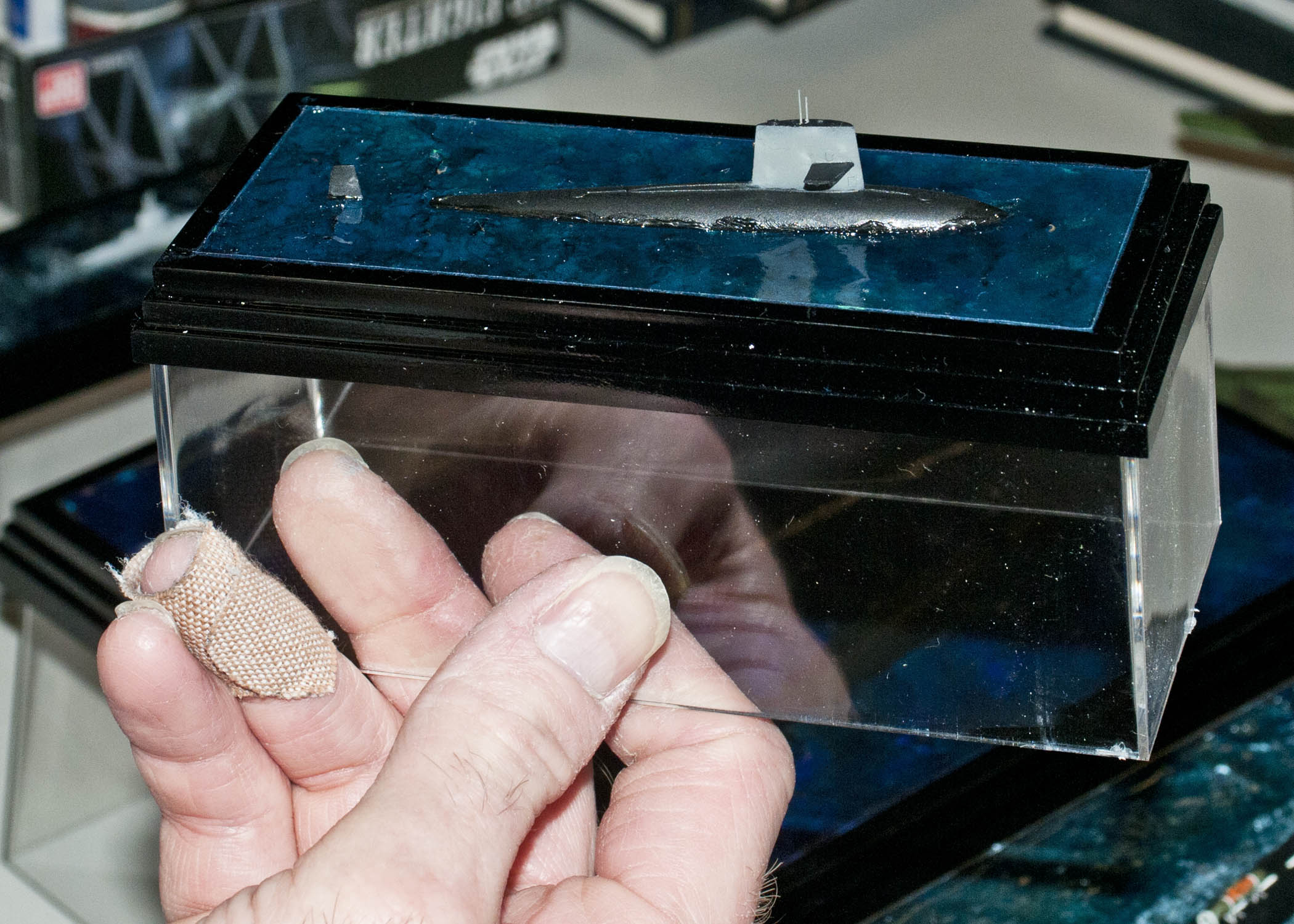
USS Scorpion, 1/700th, DML, built by Charlie Scardon
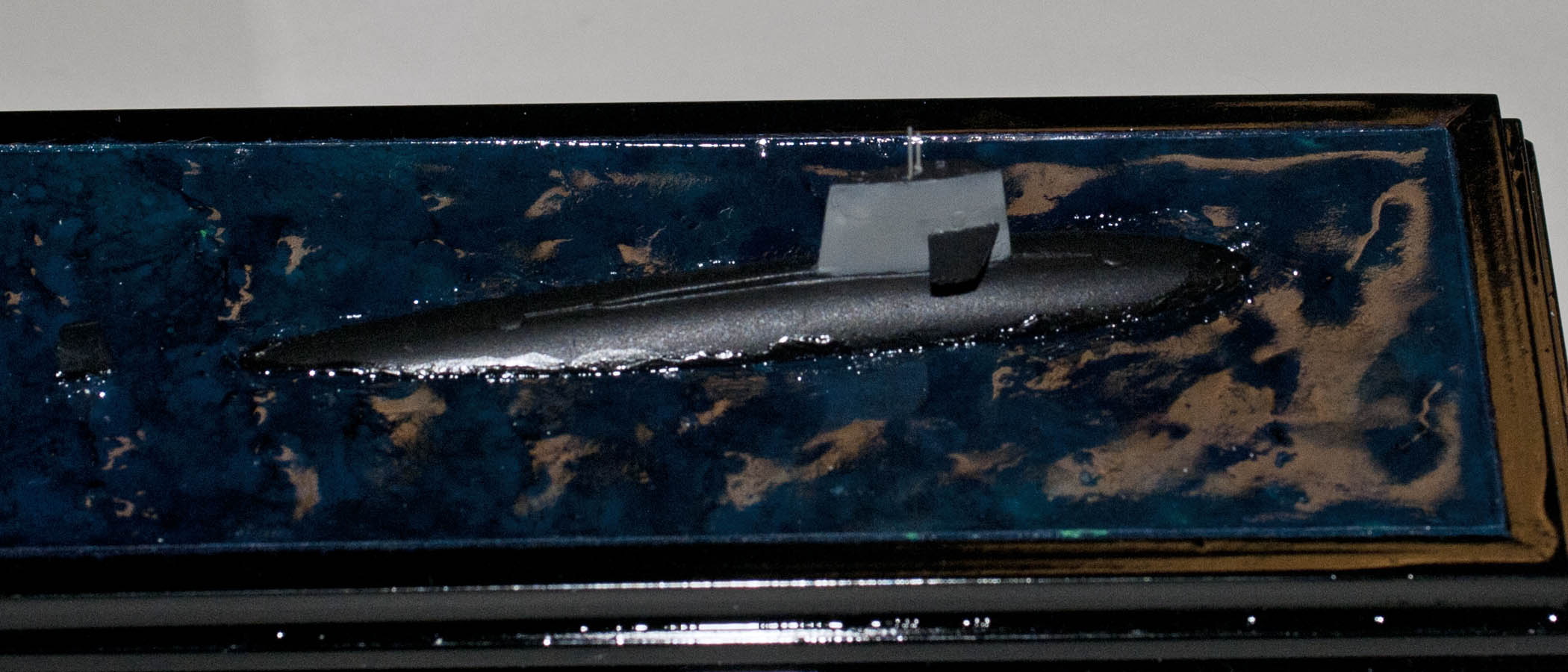
Painted with Floquil engine black and White Ensign ocean gray #17. The kit consists of a hull, two dive planes, and a rudder. Periscopes were made with brass rod.
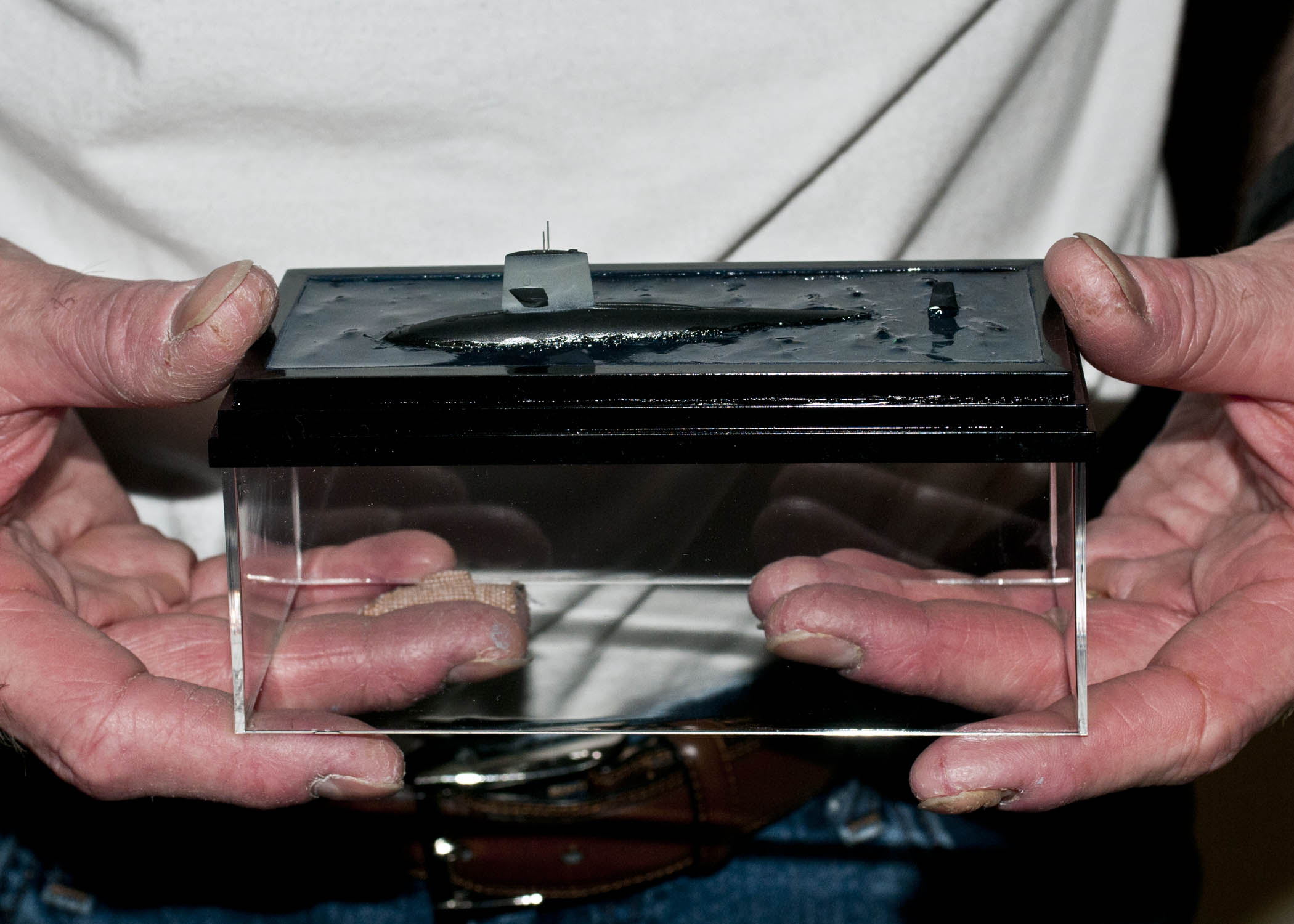
And for perspective – USS Scorpion again. A picture really can’t do these outstanding miniatures justice! (Click the image for a REALLY close look!)
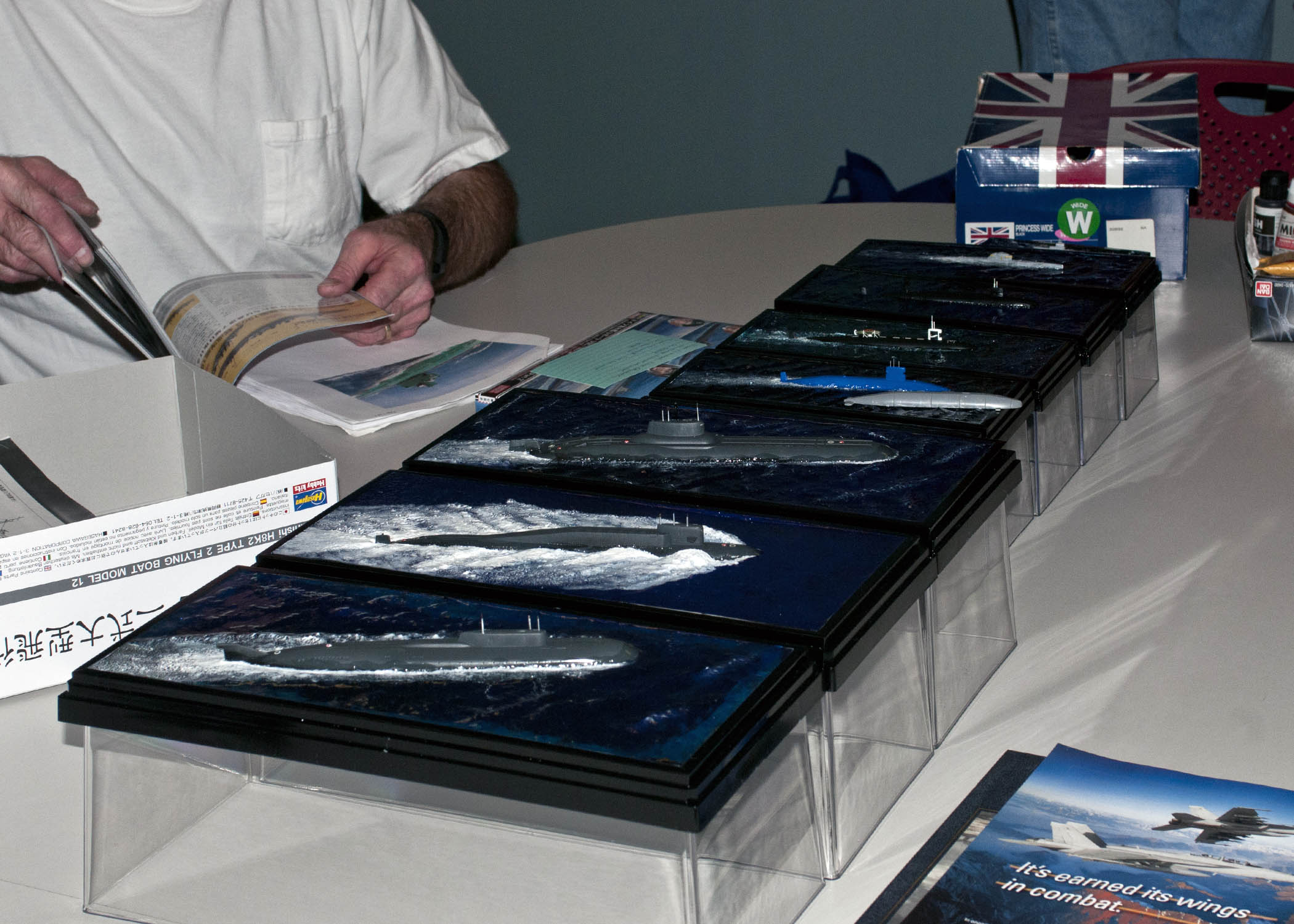
 

And a couple of parting shots…  The motley crew (some more than others).
Posted in Recaps and Photos, Themes and Programs | 2 Comments

2017 January Meeting Notes

January 20, 2017 McKinstry Meeting
Theme: Prop jobs and ships – Korean War

Notes by Paul Gasiorowski and The Tick

Attendees were: Paul Gasiorowski, THE TICK, Mike Hanlon, Jim Batchelder, Frank Ress, Brian Gardner, Charlie Scardon, Steve Kumamoto

The meeting was held in the Cardinal Room. Everyone seemed to like it better than conference room I or the Hendricksen Room. It’s an in between size, but comfortable. (We’ve made inquiries, and the current library policy is that they’ll only make the Cardinal Room available to groups like ours if we’re bumped from a reservation in the Hendricksen Room. And, of course, the primary problem with that is that we can’t get reservations for the Hendricksen in the first place. Frank has requested that the library revisit this policy, due to decreased availability of the Hendricksen Room, but the response so far has been negative.)

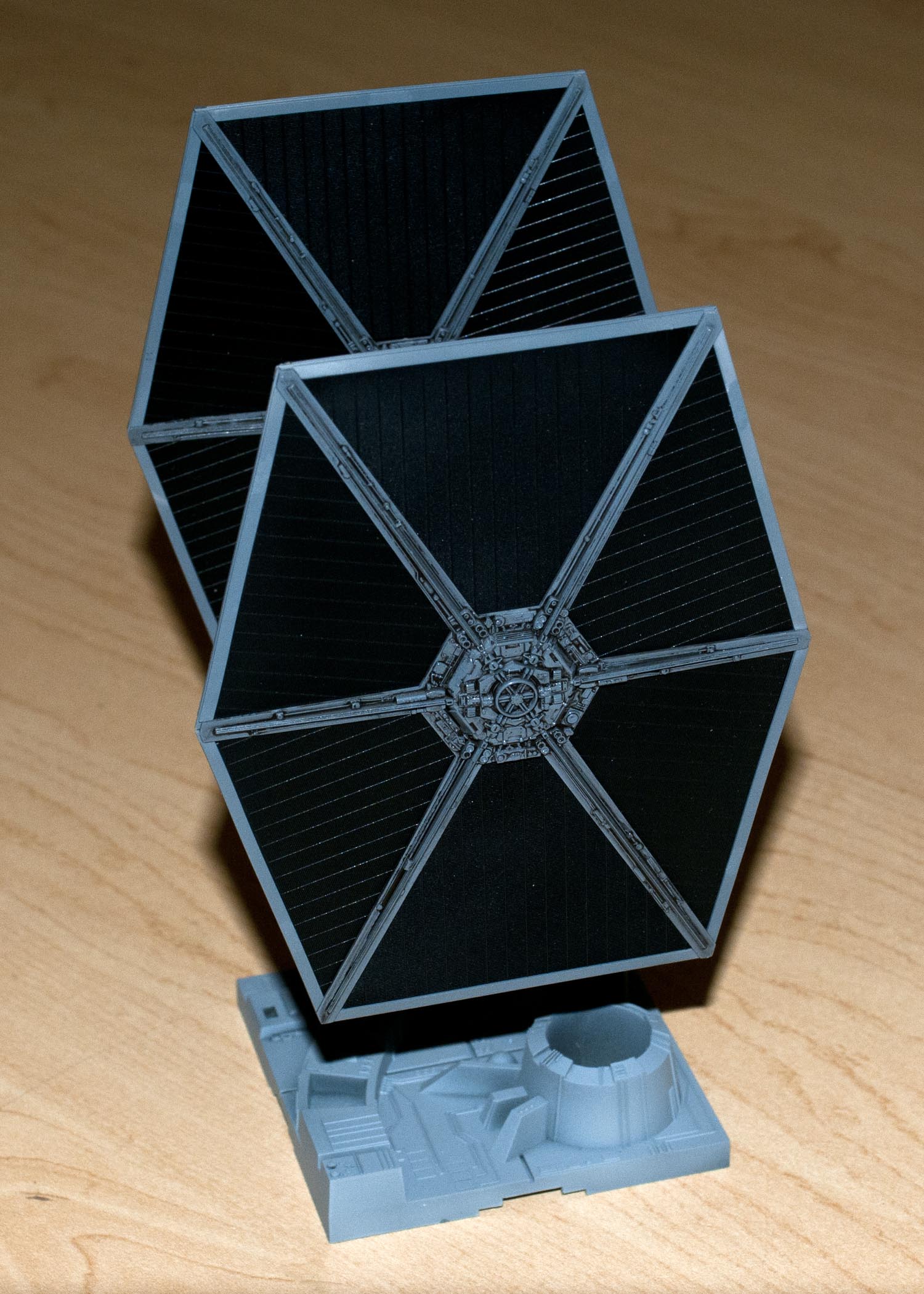
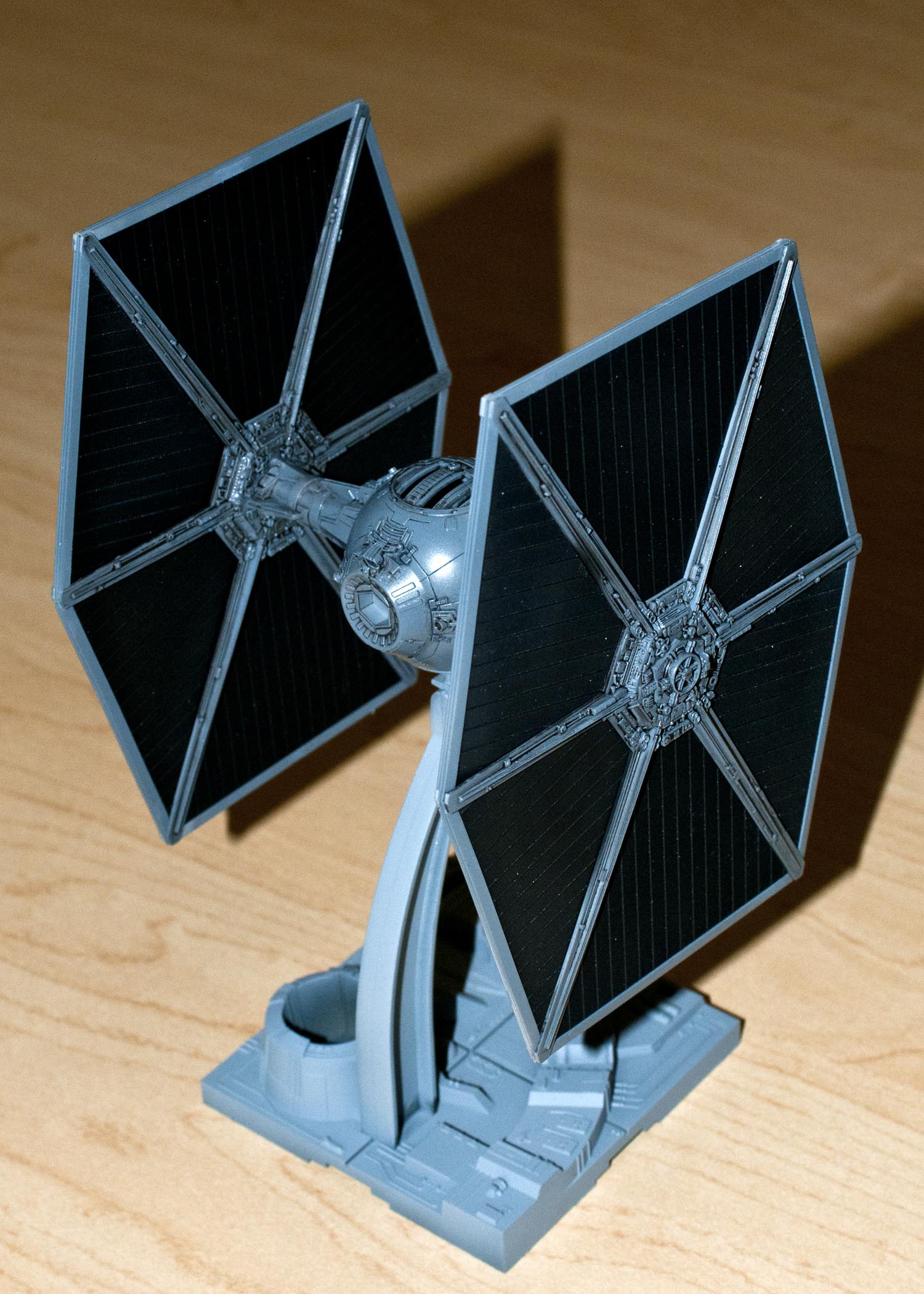
Star Wars TIE fighter, 1/72nd, Bandai, built by Mike Hanlon

Built OOB, no English translation in the instructions or indication what colors to use. Mike used neutral gray and neutral gray with 20% white added. The base was made so other Bandai Star War pieces could be attached inline.

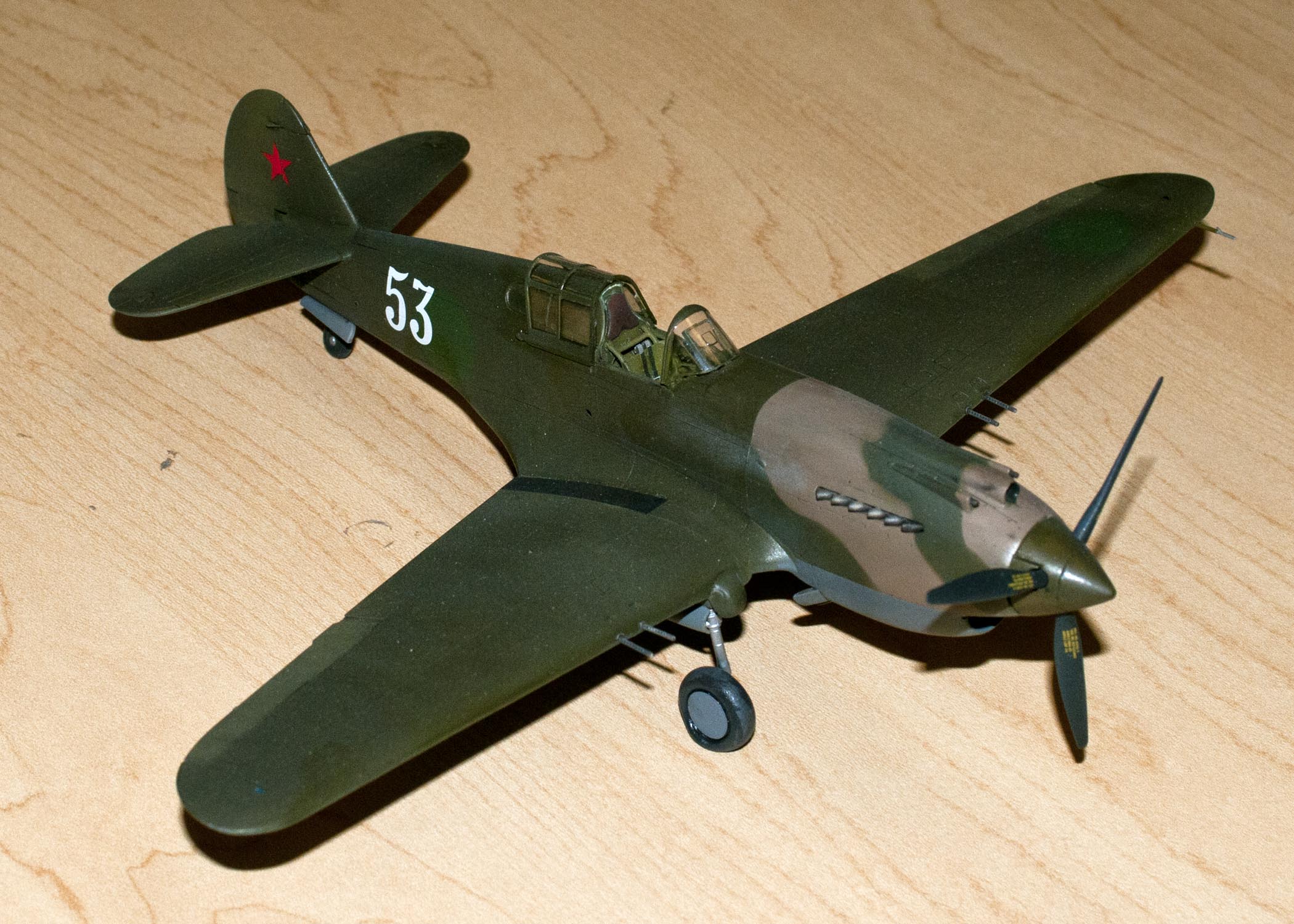
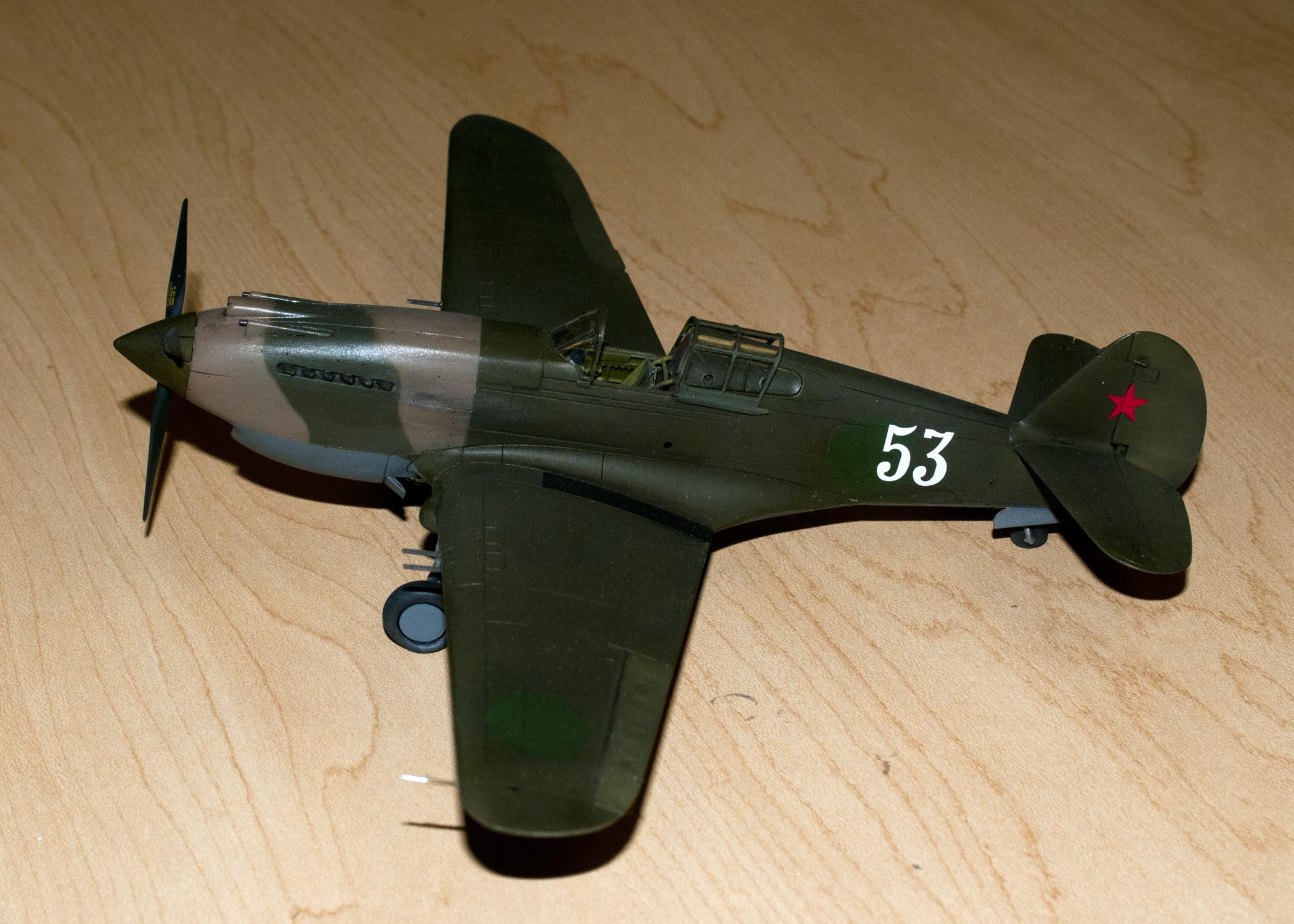
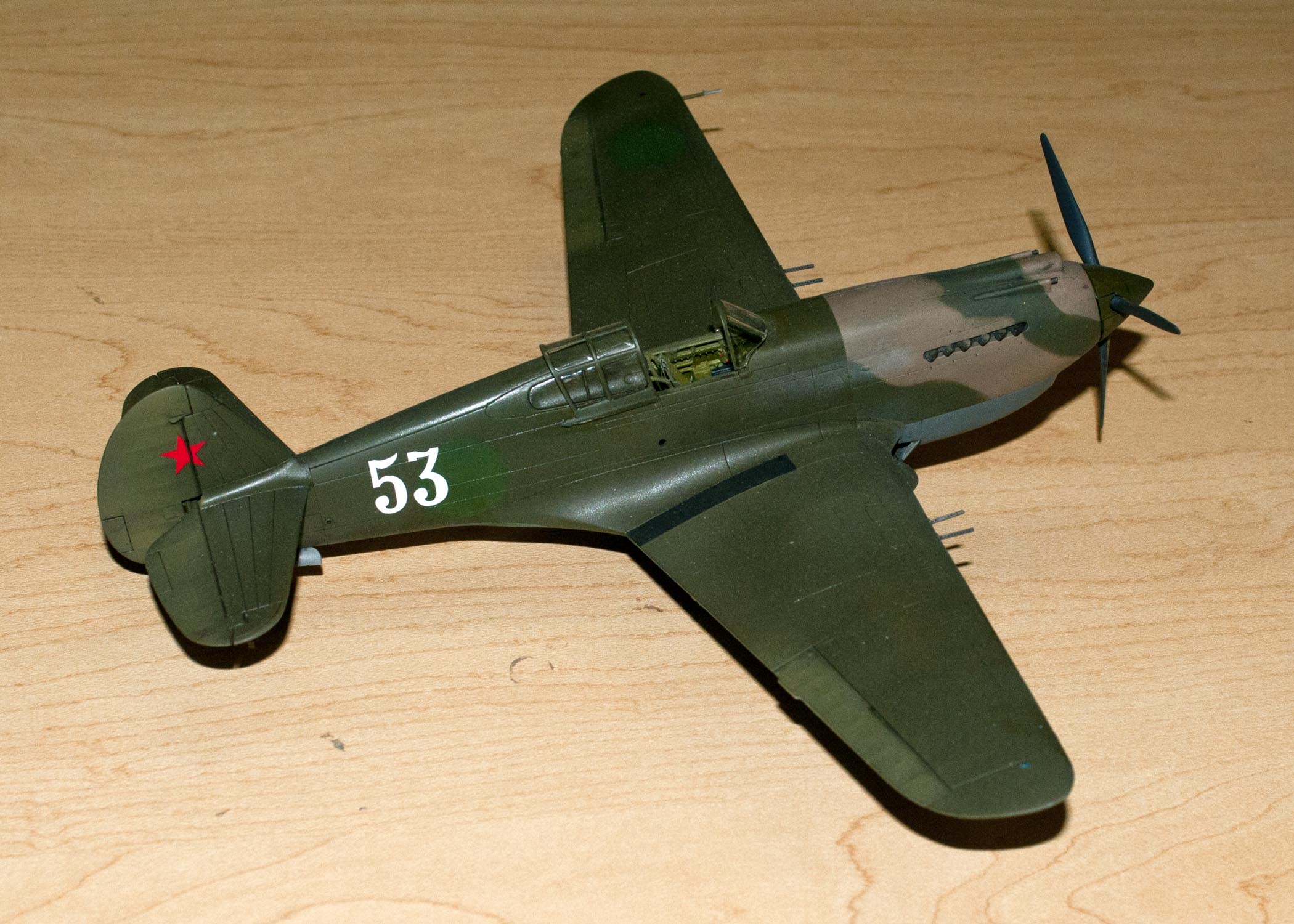
P-40B, 1/48th, Airfix, built by Mike Hanlon

Xtra Decals depicting a Russian P-40 1941-2. Vallejo paints were used including dark O.D. and neutral gray. Light blue was used to simulate painting over the U.S. Insignia as the P-40’s were delivered to Russia with U.S. markings.

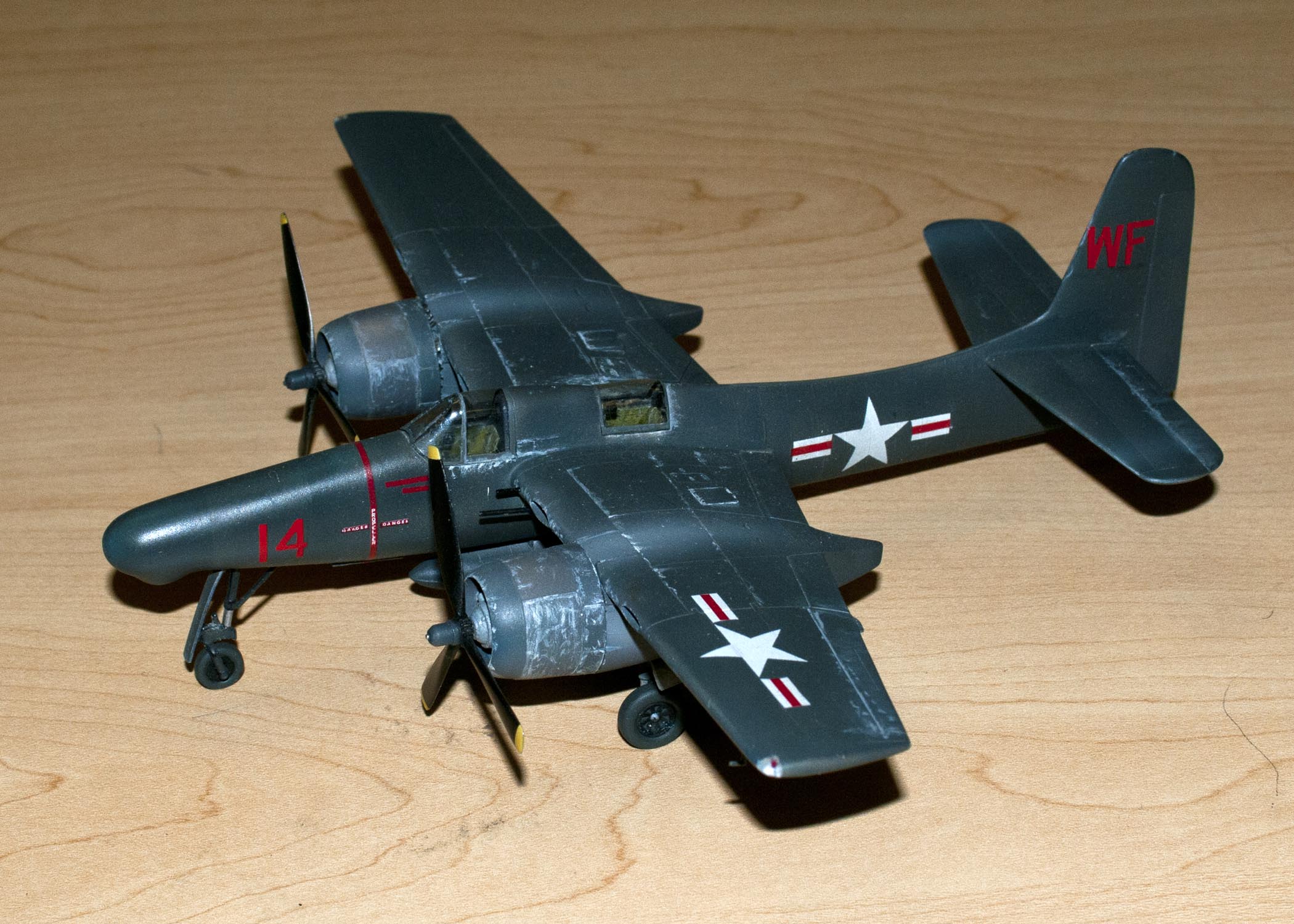
F7F-3N, 1/72nd, Monogram, built by Steve Kumamoto

Scratch built radar operator compartment (seat, instrument panel, etc.) and nose wheel well. The rear canopy was vac formed over a plaster mold. The nose from canopy forward is a custom vac formed piece. Replacement props are Aero Club with square tips.

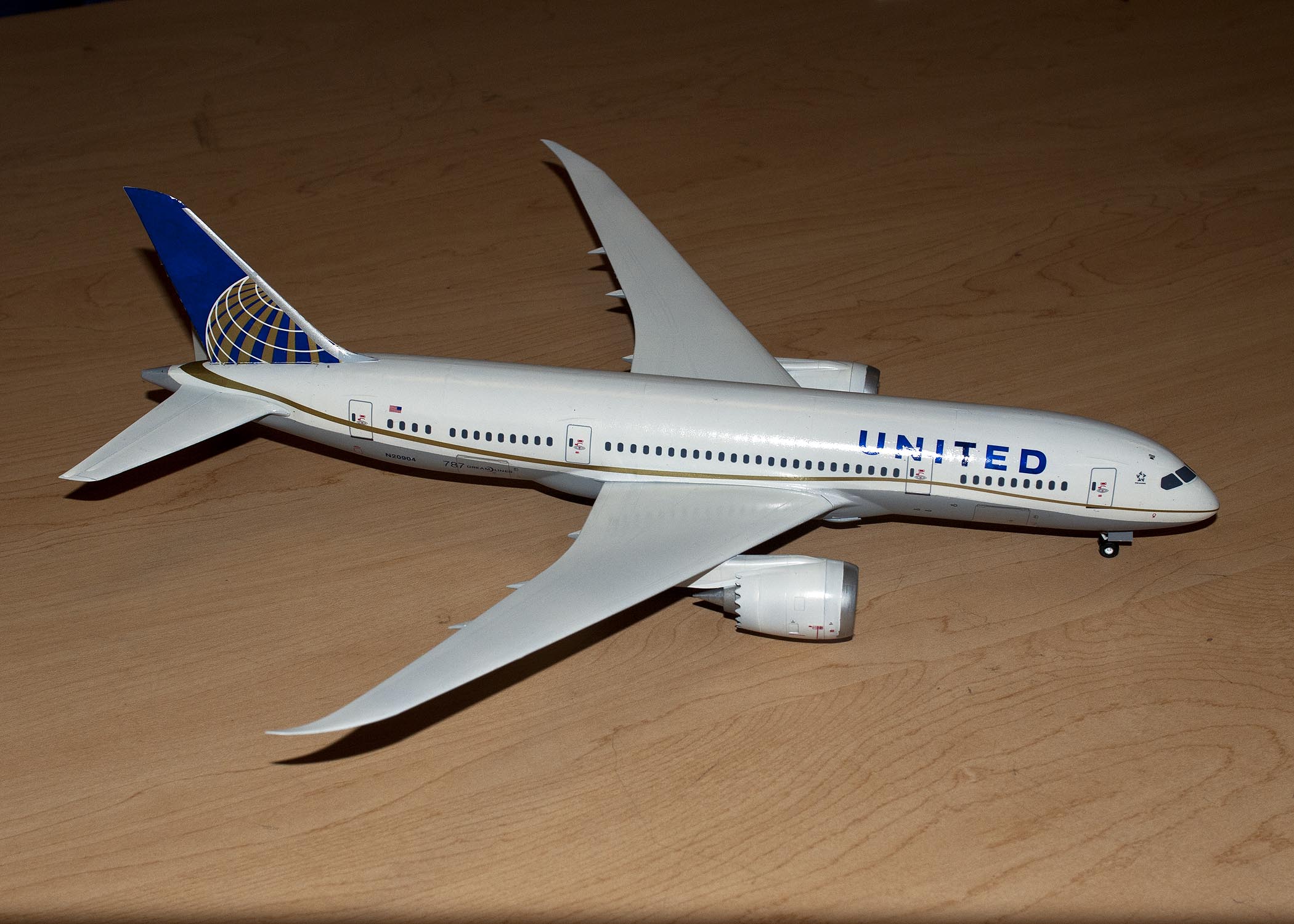
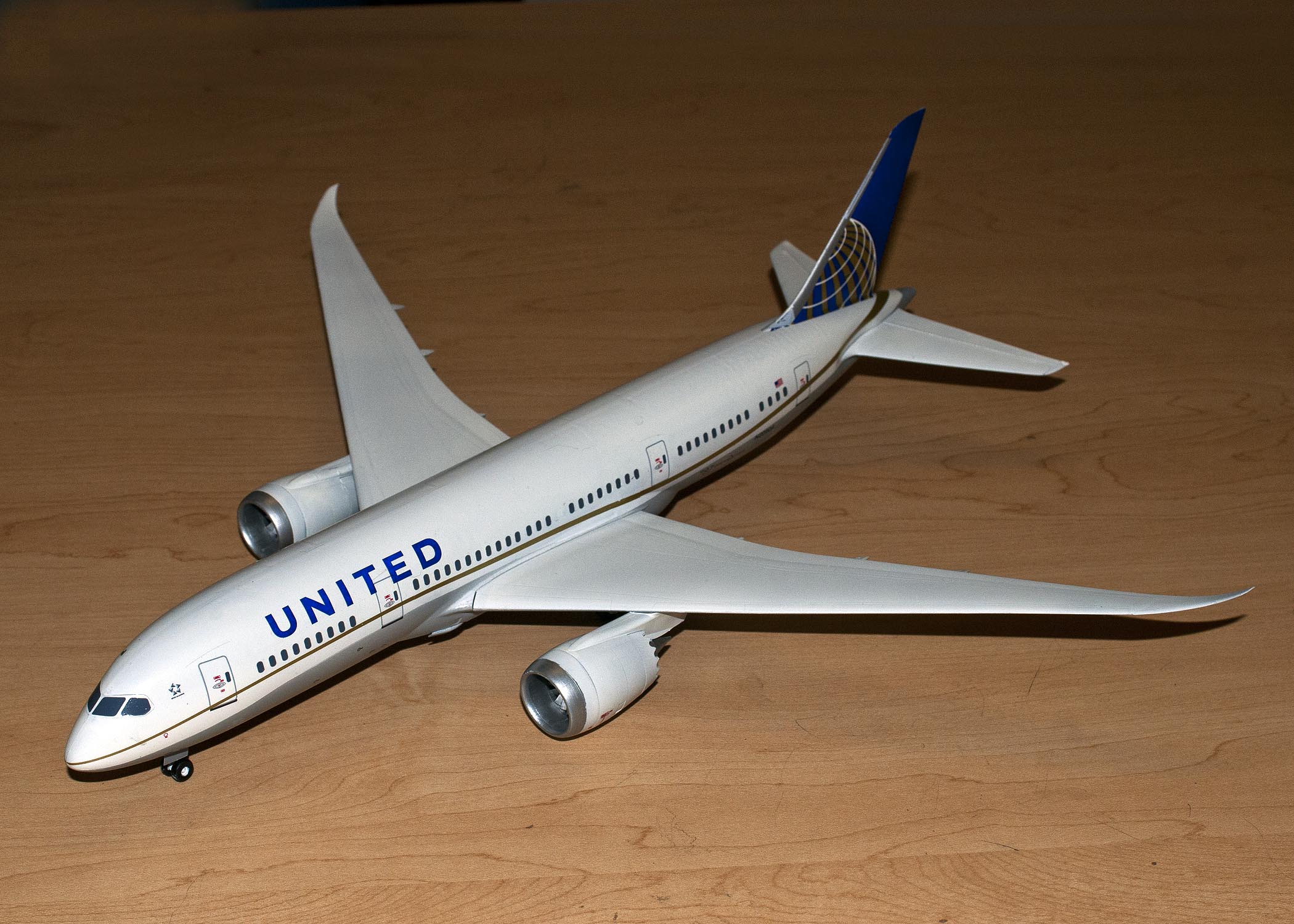
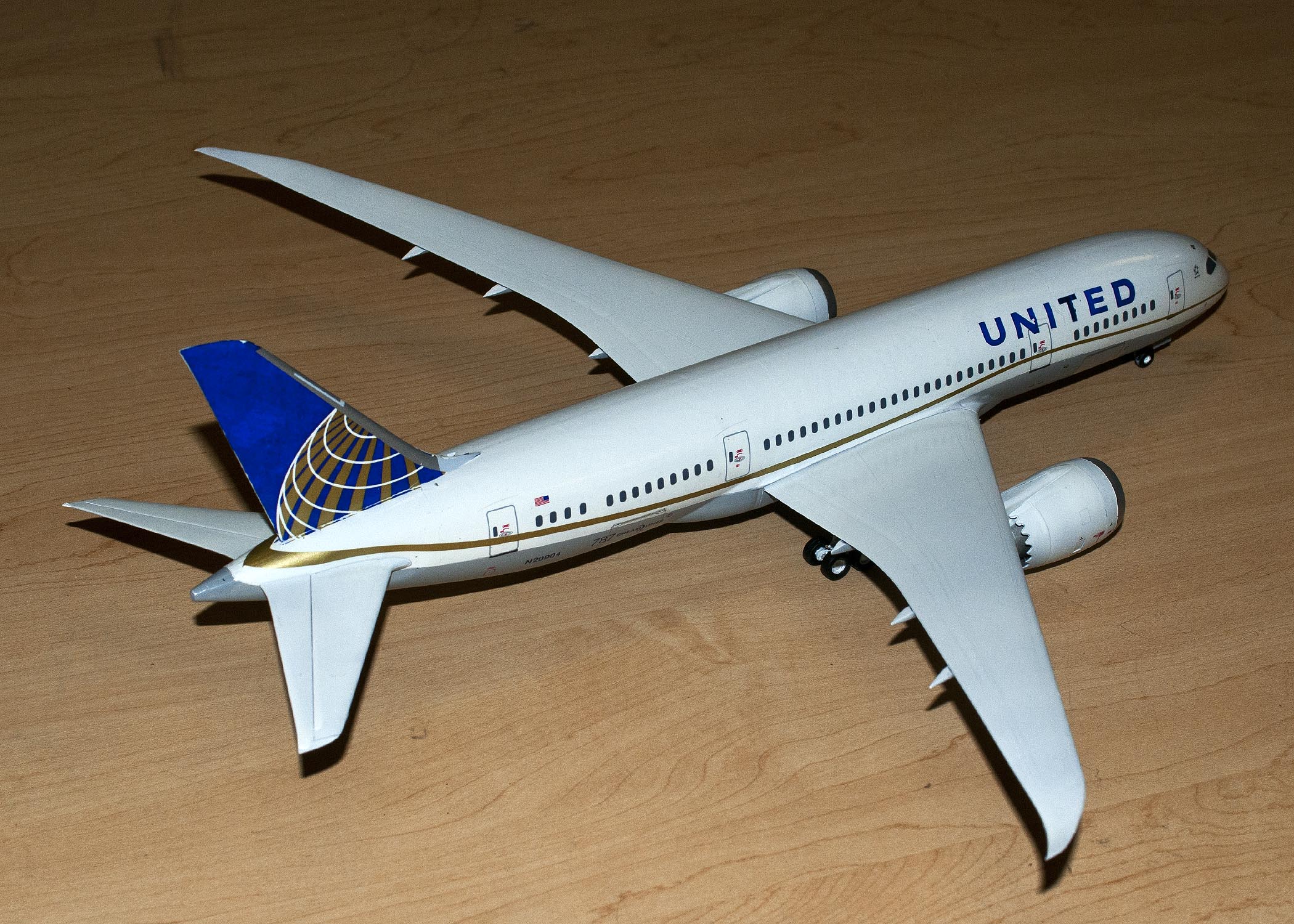
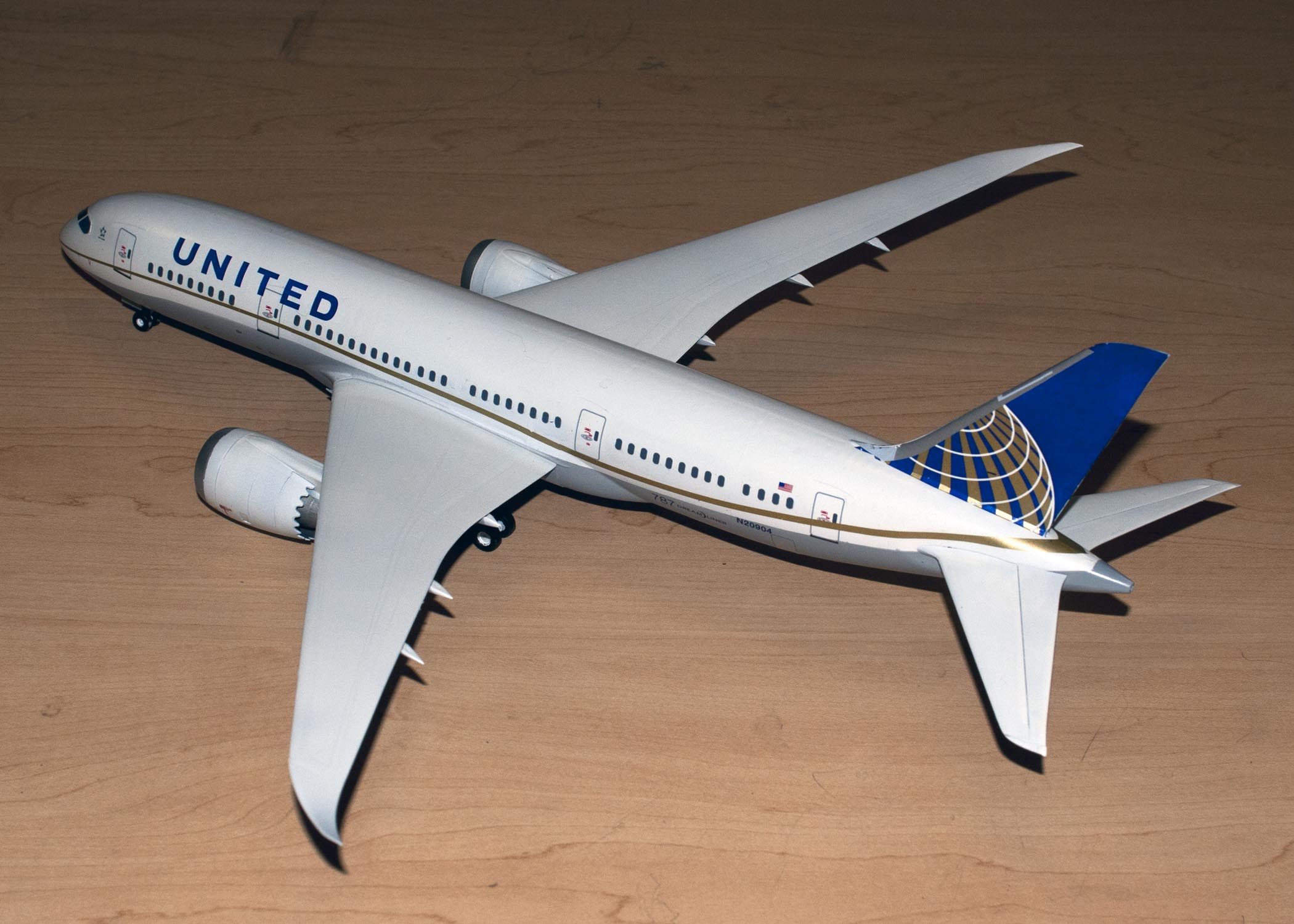
Boeing 787 Dreamliner, 1/144th, Zveda, built by Paul Gasiorowski

Paul reports the overall fit of this kit is very good – the wing to fuselage fit was so good that glue is not necessary to attach it to the fuselage. He used Model Master Acrylics. The model was built OOB. The kit decals were for a Boeing Demonstrator for United Airlines from F-Dcal. The sheet included decals for the windows. The clear kit windows were glued in and then sanded smooth to the fuselage. The engines were little kits in themselves containing about 15 parts each. When finished it’s a big kit, it needs about 1.5 sq. feet of space.

Read Paul’s kit review (soon to come) for additional details.

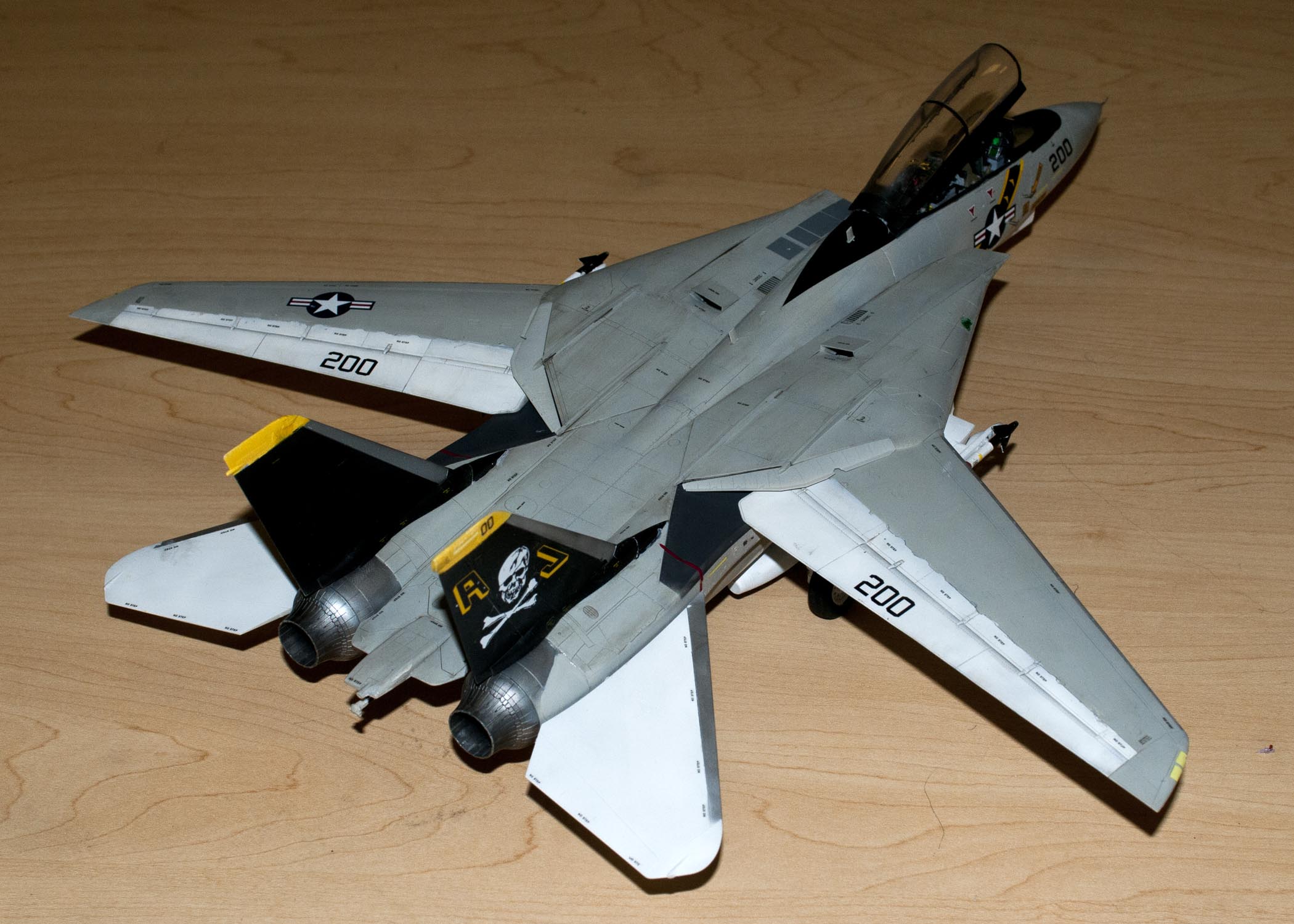
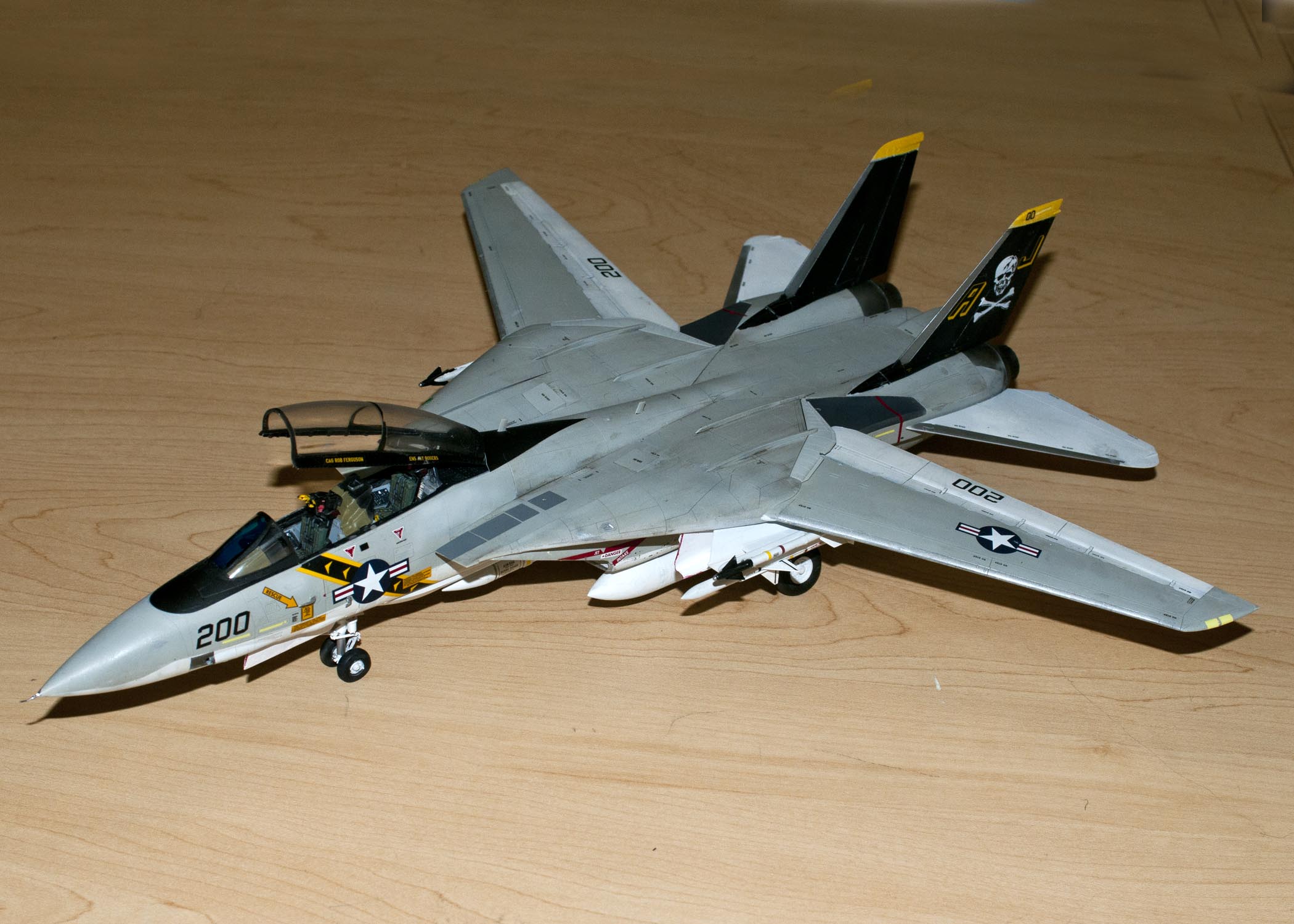
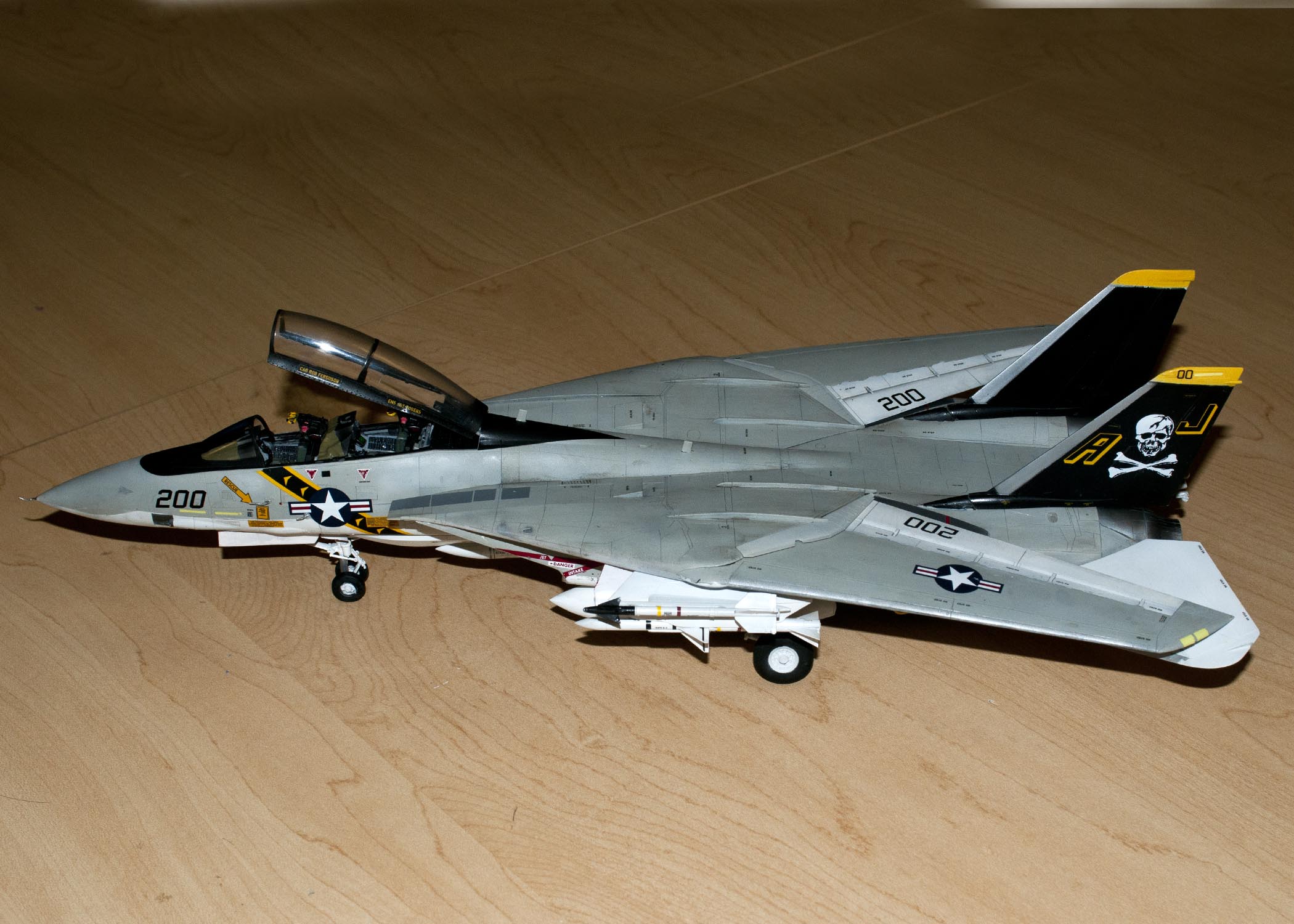
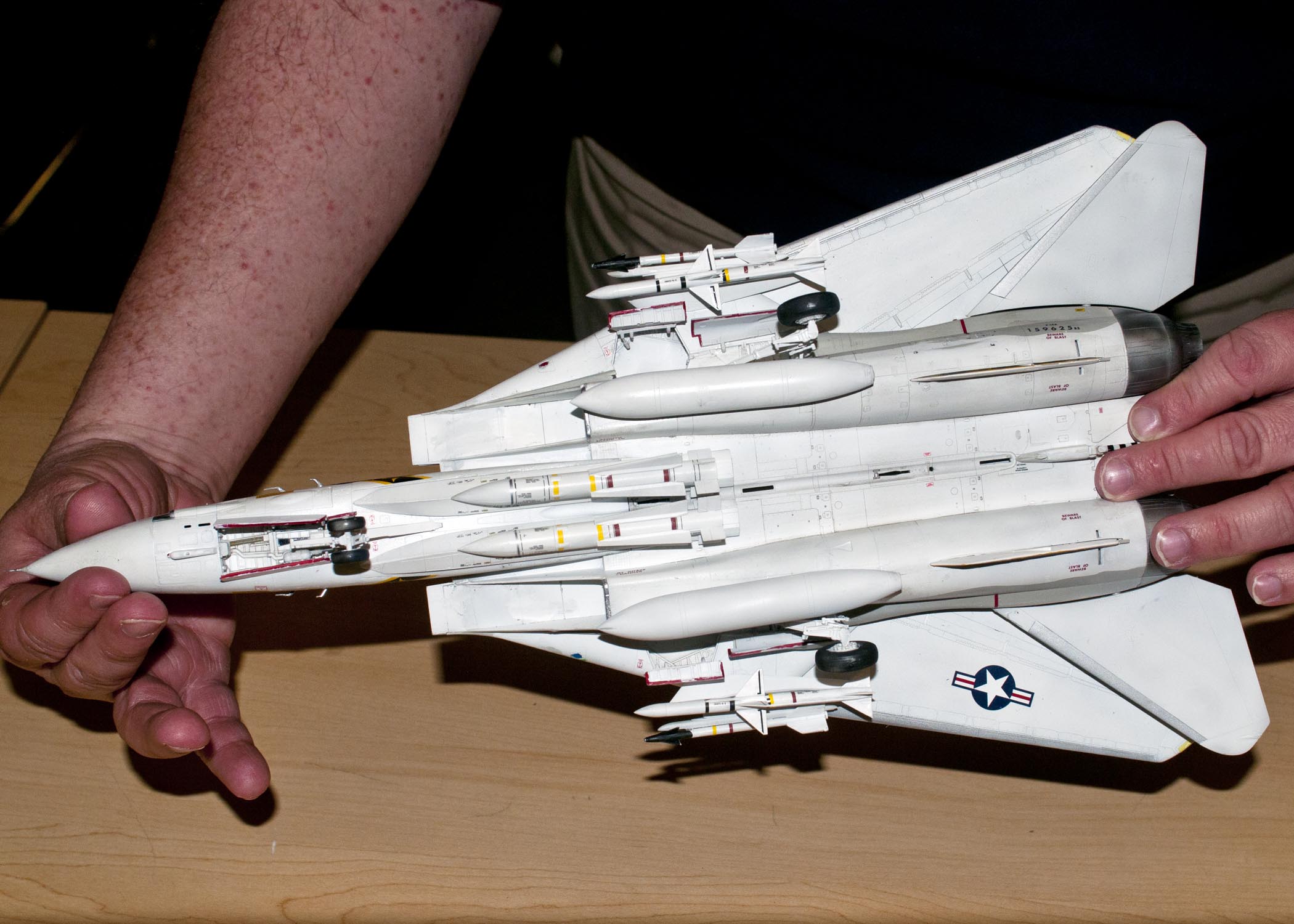
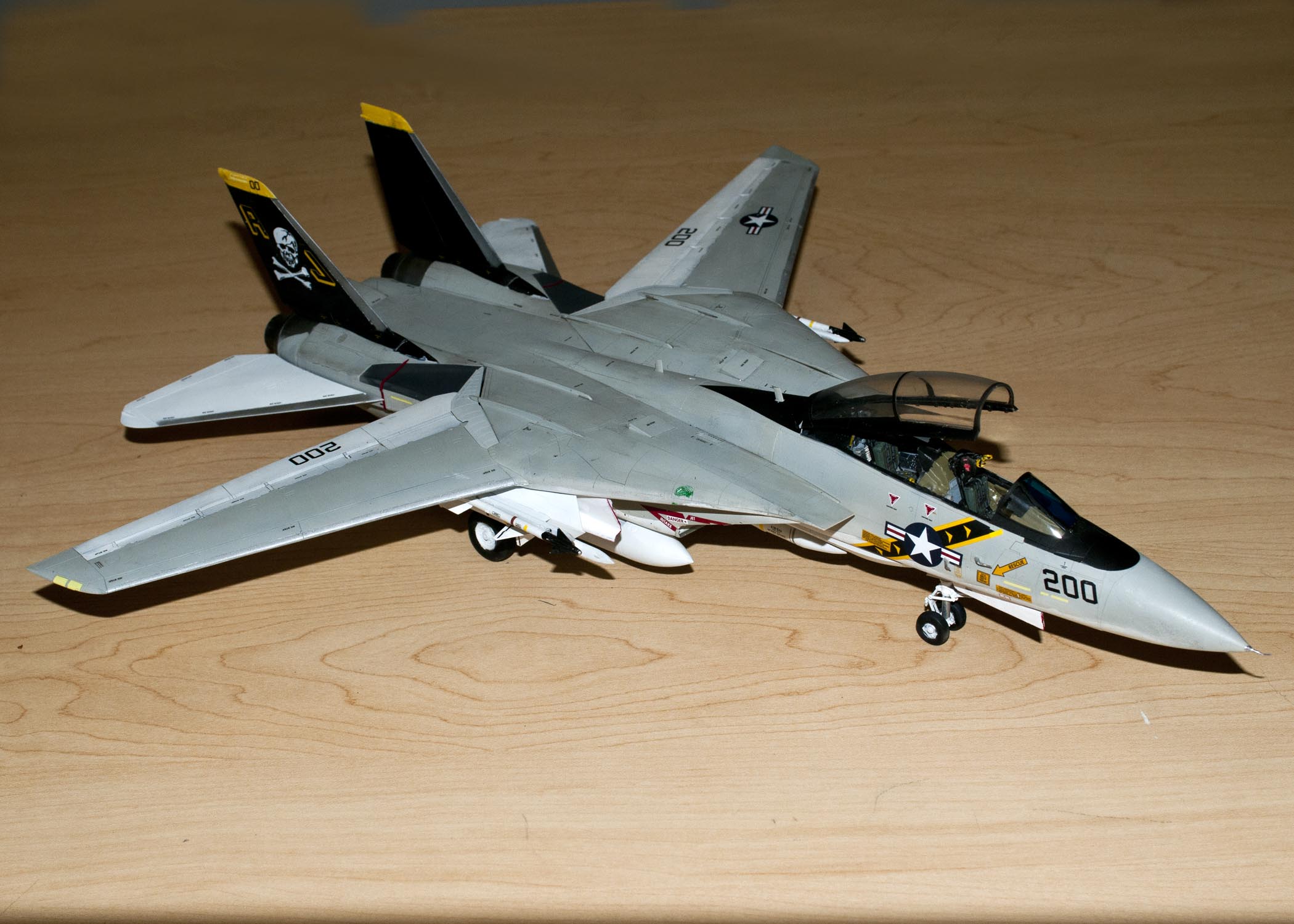
F-14 Tomcat, 1/48th, Tamiya, built by James Batchelder

Built out of the box, it was a good build – basically shake and bake. This kit is the best engineered Tomcat in any scale. Jim encountered no problems assembling it. Model Master paints used throughout. Clear blue was used to tint the canopy. The decals represent VF-84 Jolly Roger squadron.

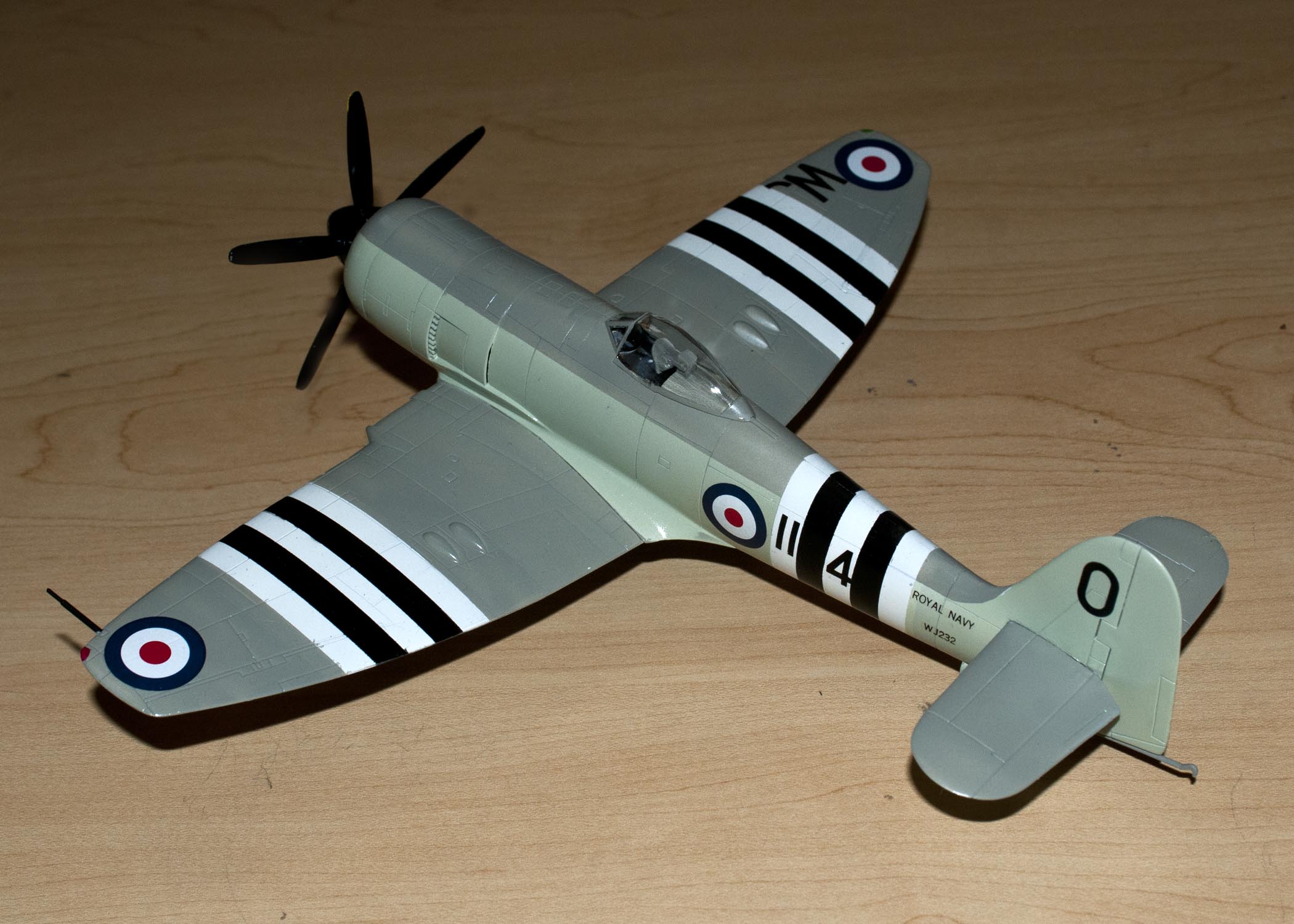
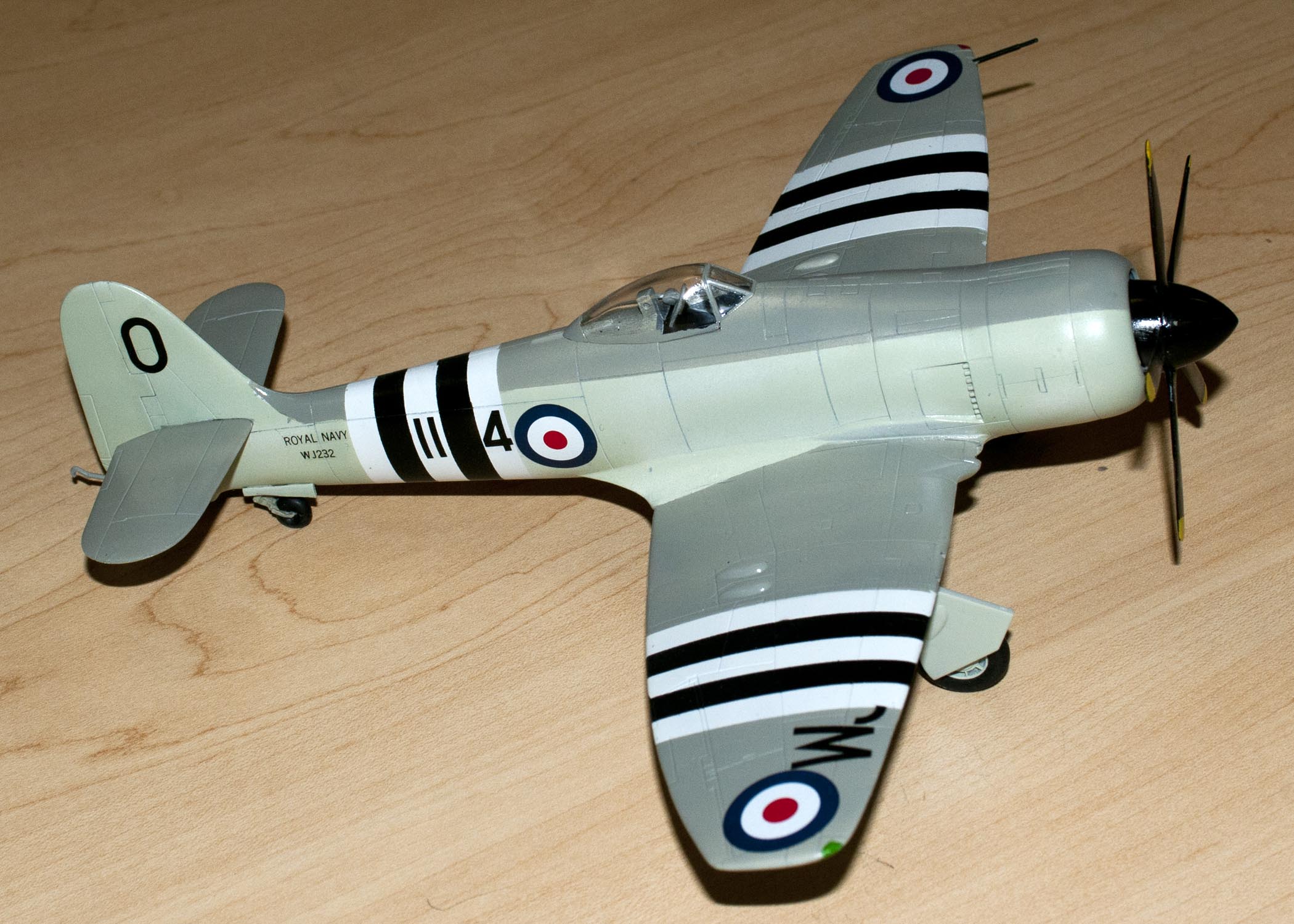
Sea Fury F.B. Mk II, 1/48th, Hobbycraft, built by Paul Gasiorowski

Built OOB, including photo etch, Vac canopy, and resin side panels. Photo etch parts and resin side panels are hidden once the canopy goes on. There was no need for any filler to be used. Model Master acrylics. Decals for a British carrier based a/c during the Korean War.

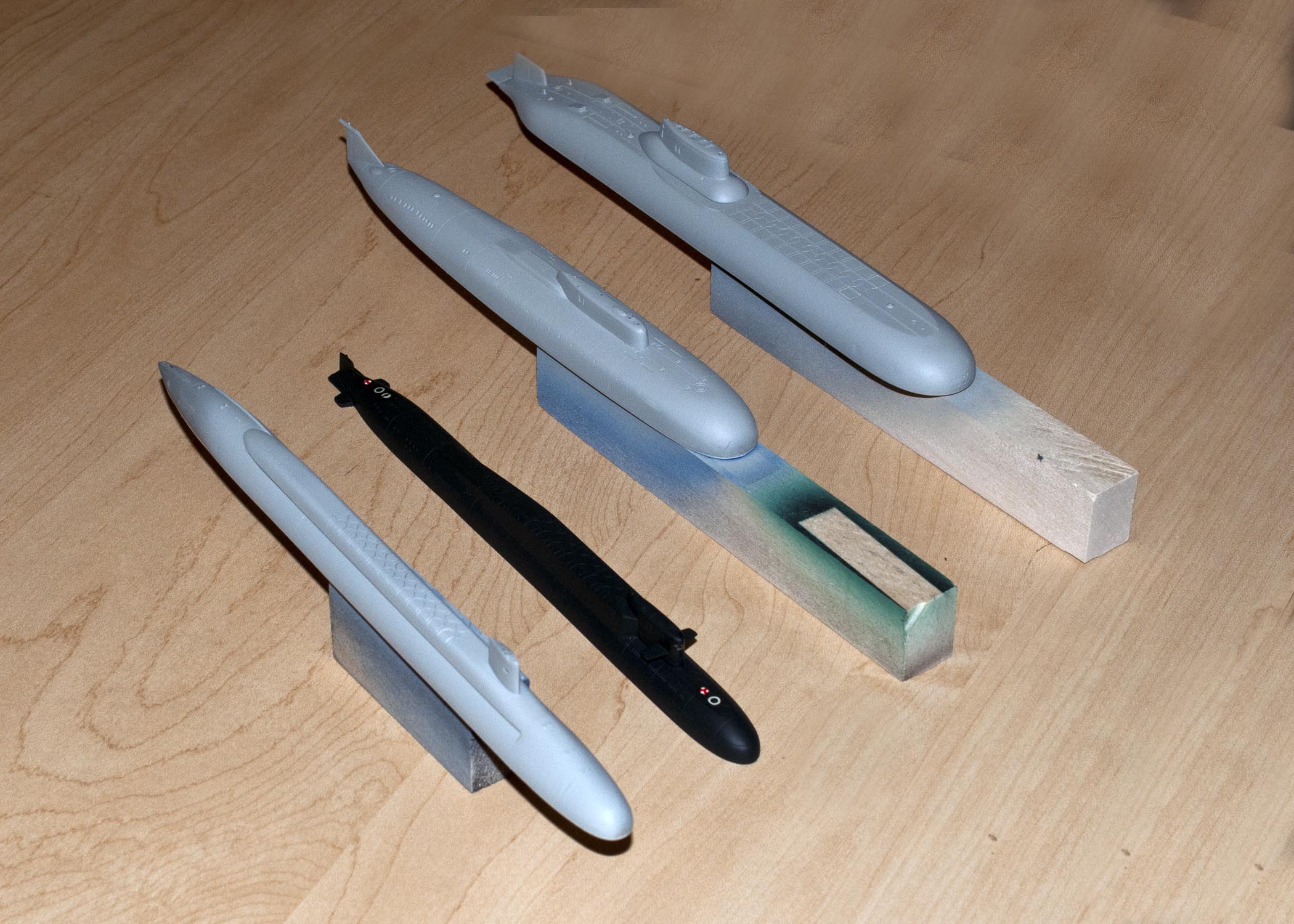
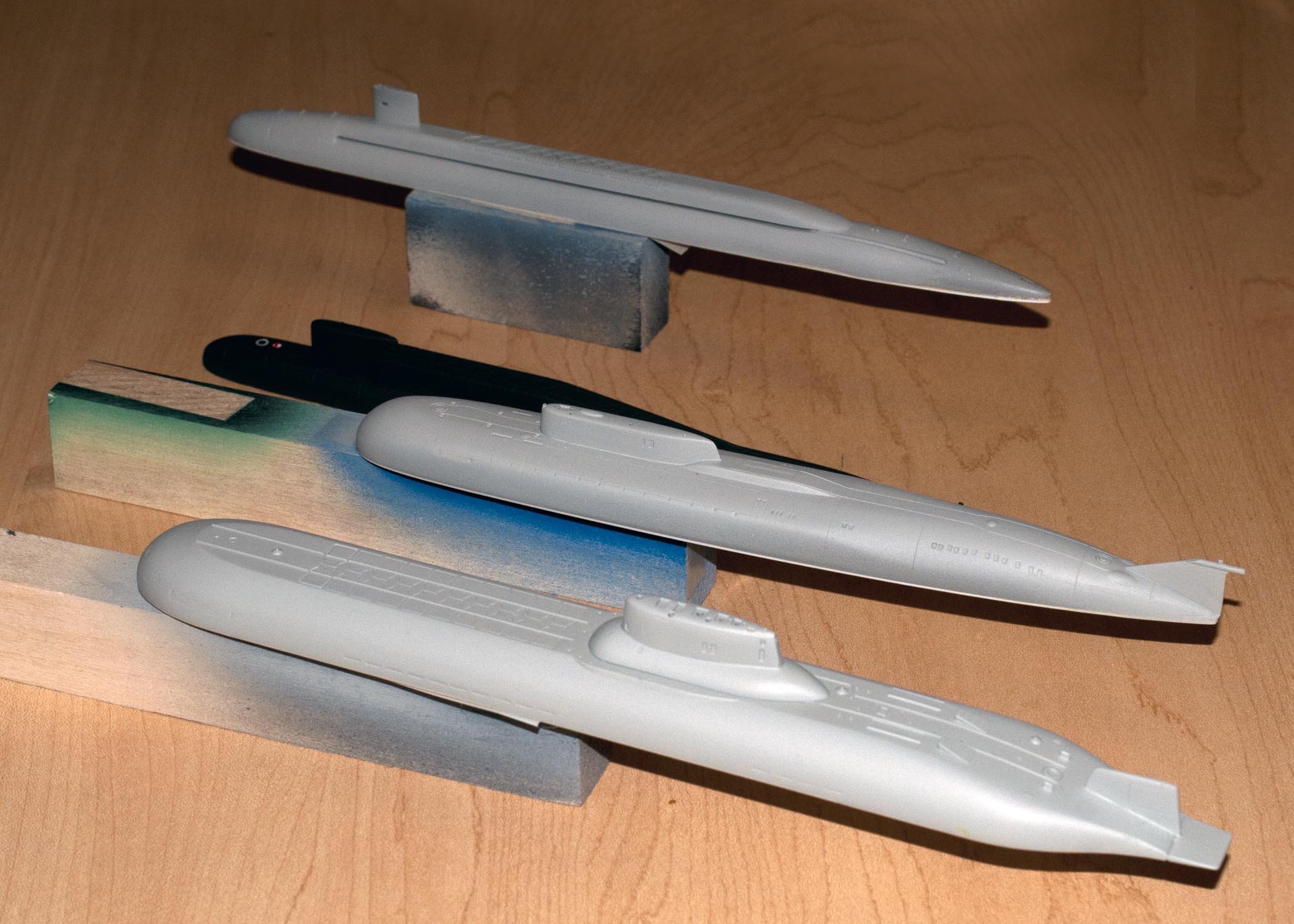
Typhoon, Oscar II, Delta III, Ohio class, 1/700th, DML, built by Charlie Scardon

Work in progress.  Subjects listed top to bottom in left image.

What the???

The moment Steve notices that he scratch built the wrong type nose wheel gear section, and that the rear strut is backawards (sic)…

…and Charlie evidently couldn’t care less – he’s still tryin’ to figure out that new-fangled ‘smart’ phone…

Posted in Recaps and Photos | Leave a comment

2016 November Meeting Notes

November 18, 2016 McKinstry Meeting
Theme: Radial Engines Post-WWII

Notes by Paul Gasiorowski and The Tick

Attendees were: Frank Ress, Paul Gasiorowski, Jim Batchelder, THE TICK, Charlie Scardon, Steve Kumamoto, Dan Paulien, Carl Geiger, Mike Hanlon

There were not so many members at the November meeting so we had some extra time. After the business part of the meeting was finished, we discussed many subjects – “stuff” like Mike Hanlon’s tanning salon visits and the annual Butch O’Hare contest. It appears the contest rules have changed up over the years. The Tick mentioned he would try to get a set of the rules via Bill Soppet, but of course that likely won’t happen because the Tick always has “other stuff” on his mind…

Since there was plenty of time, Mike Hanlon tried to use as much of the evening as he could to talk about his current build, knowing full well that he had a longer leash than usual. 2016-nov-meeting-01

Yes, he really pushed it, to the point Charlie indicated he couldn’t handle it any more.
Hanlon went on, and on… and on…


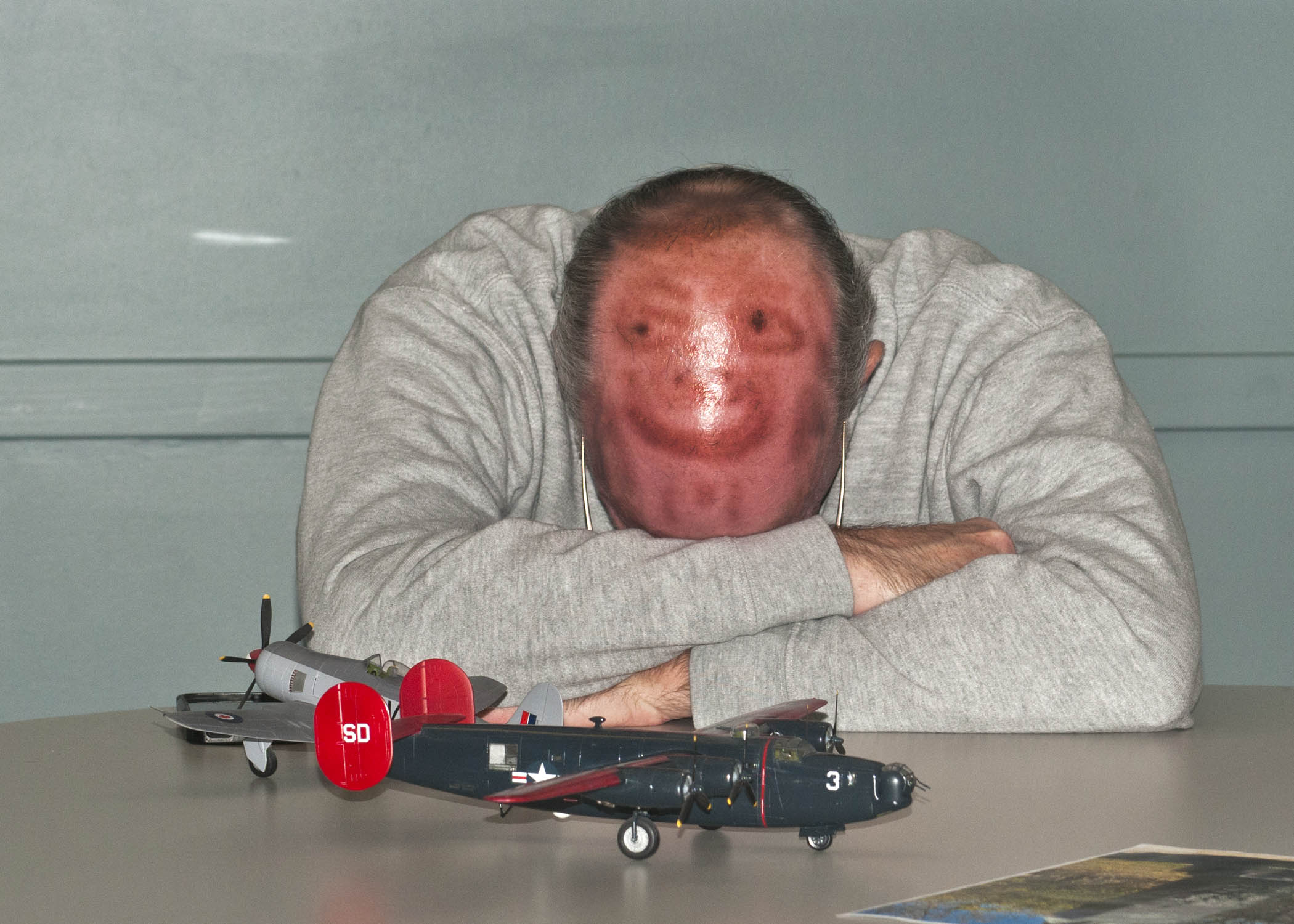
Charlie, exhausted, took a nap… and Hanlon continued to drone on. Droning on… extolling how great his craftsmanship has become and the virtues of the kit itself.

2016-nov-meeting-02-1


One of the guys had a tube of lipstick so… Like who knew the Tick was an artist? 2016-nov-meeting-02WE WON’T identify what member was thoughtful enough to have lipstick, but Charlie is grateful that it wasn’t a Sharpie.


Butch O’Hare Award

2016-nov-meeting-03

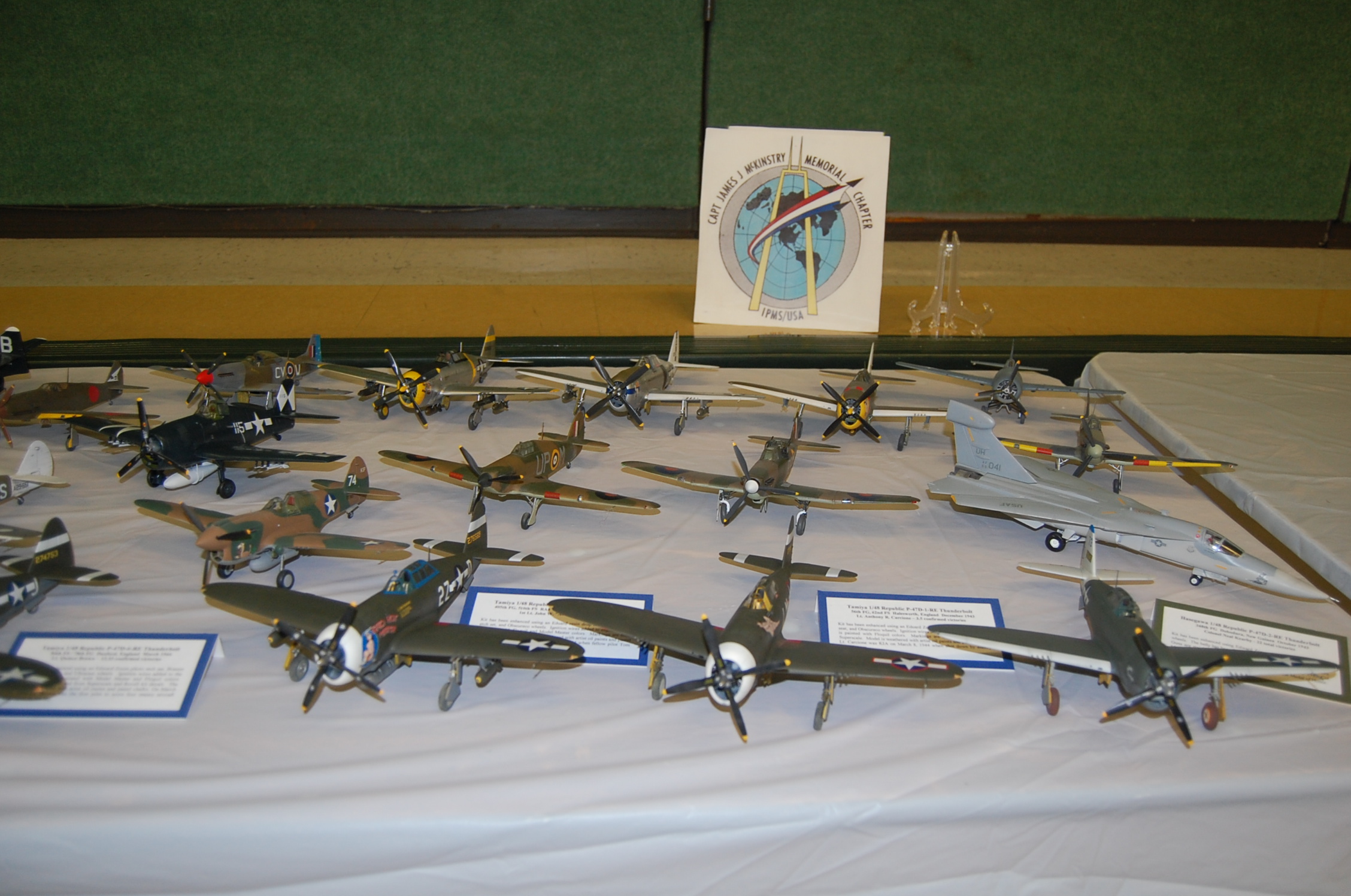
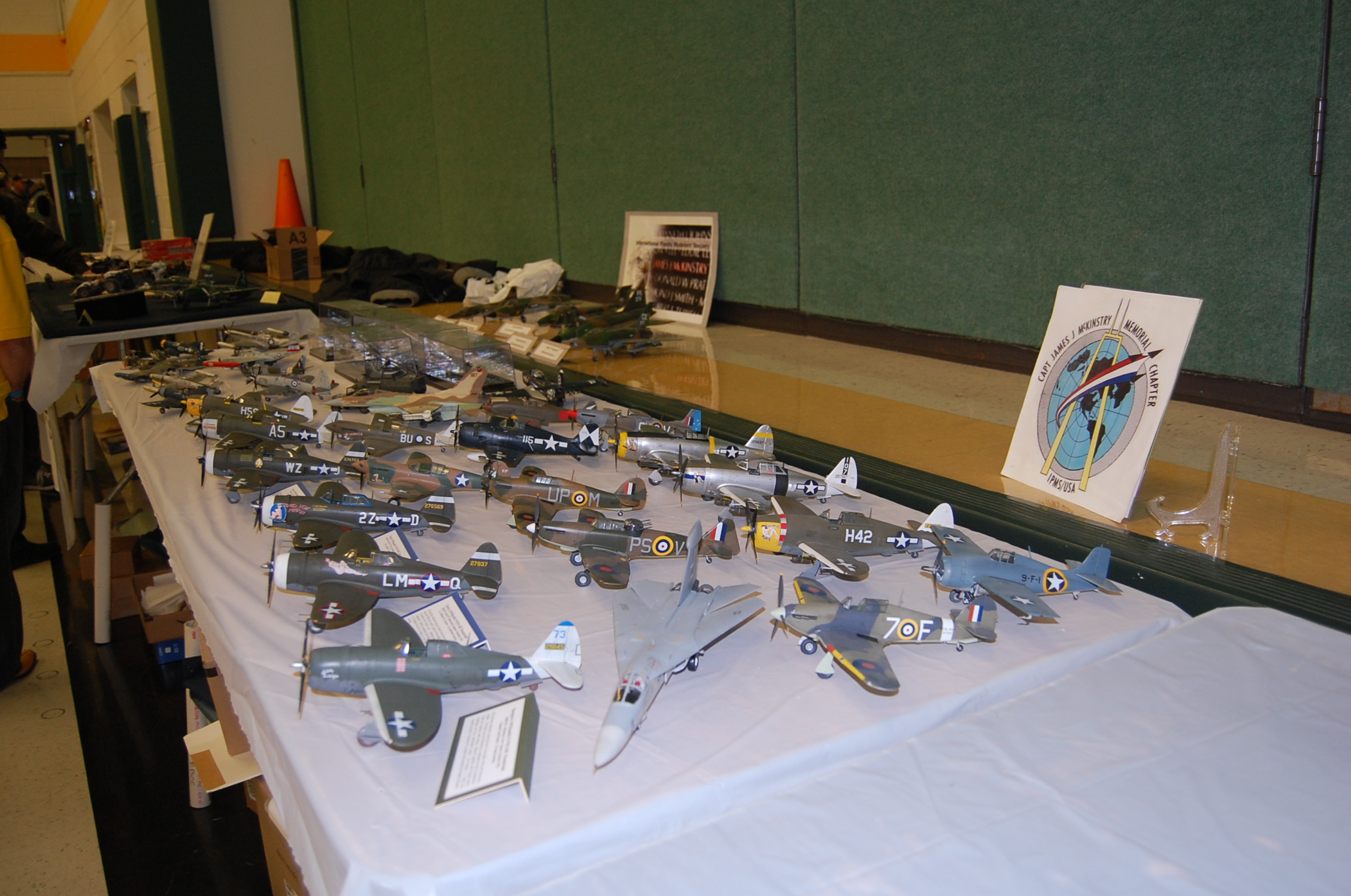
After Hanlon ran out of words… discussion turned to the display table McKinstry had at the annual O’Hare show. Our club was deemed to have the best display and rewarded with the Butch O’Hare “Best Club Display 2016 Award” for the 3rd year in a row.  A three-peat! We expect this feat will generate as much buzz for the club as it did for the Bulls.

For his time and energy organizing this project, the McMembership presented the plaque to Paul Gasiorowski.. WELL done, Paul!

Those who loaded the table (and behind it) included James Batchelder, Paul Gasiorowski, Carl Geiger, Mike Hanlon, Steve Kumamoto, Ed Mate, Dan Paulien, Frank Ress, Charlie Scardon, and the Tick.

2016-nov-meeting-07 2016-nov-meeting-06 2016-nov-meeting-05 2016-nov-meeting-04

There was some discussion of ideas for next year’s show. Comments included the idea that we have a THEME or two to put on the tables.

Paul suggested airliners, or 144 scale jets. Of course, he’d have to supply most of the models in these categories – he says he has 6 or so. Sounds like his memory is going, or that he’s estimating only 6 to throw off the wife.

Another suggestion was to get away from Thunderbolts, we had plenty at this years table. We should be more diverse to try to be best of show again in 2017. Hmmm. It might be a challenge for some members to come up with anything OTHER than T-bolts; can a leopard change it’s spots?

Library Display

2016-nov-meeting-08

IPMS McKinstry put up our annual display at the library. This time around, the theme was Pearl Harbor. Included were models of aircraft and ships present plus several books, a map, and other information describing the attack.

Thanks to the club members who provided items and helped set up the display: Brian Gardner, Paul Gasiorowski, Steve Kumamoto, Frank Ress, Charlie Scardon, and Dan Paulien.

Models for the VA

Paul Gasiorowski collected models and supplies for distribution to Hines VA Hospital, Maywood, IL. and the Lovell VA Administration, Naval Station Great Lakes. In all, Paul delivered over 60 kits to each plus modeling supplies. I don’t have a complete list of those who donated, but the Santa list did include Brian Gardner, Paul, Steve Kumamoto and Frank Ress.

A-1H Skyraider, 1/48th, Tamiya, built by Norris Graser

2016-nov-meeting-09 2016-nov-meeting-10

Model Master 34079 green, 30219 tan, 36622. Gunze 34102 green. AeroMaster decals for SPAD. DAD ~ CO’s a/c 6 SOS.

F-86D Sabre, 1/72nd, Hasegawa, built by Steve Kumamoto

2016-nov-meeting-11 2016-nov-meeting-12

Built many moons ago, out of the box with MicroScale decals. Overall Floquil silver. Markings are for F-86D-45 4th FIS at Misawa. Steve thought this was a nice, solid kit.

Hurricane Mk-1a, 1/48th, Airfix, built by Mike Hanlon

2016-nov-meeting-14 2016-nov-meeting-13

Italeri paints: dark earth, Middlestone and azure blue. Mike used AeroMaster decals for an aircraft based at Malta.

These planes had special tropical filters installed. Mike had to do some surgery to bring the airplane up to date. There were some fit issues, and the armor plate behind the seat was glued in first, then he shoved the cockpit into the fuselage from the bottom.

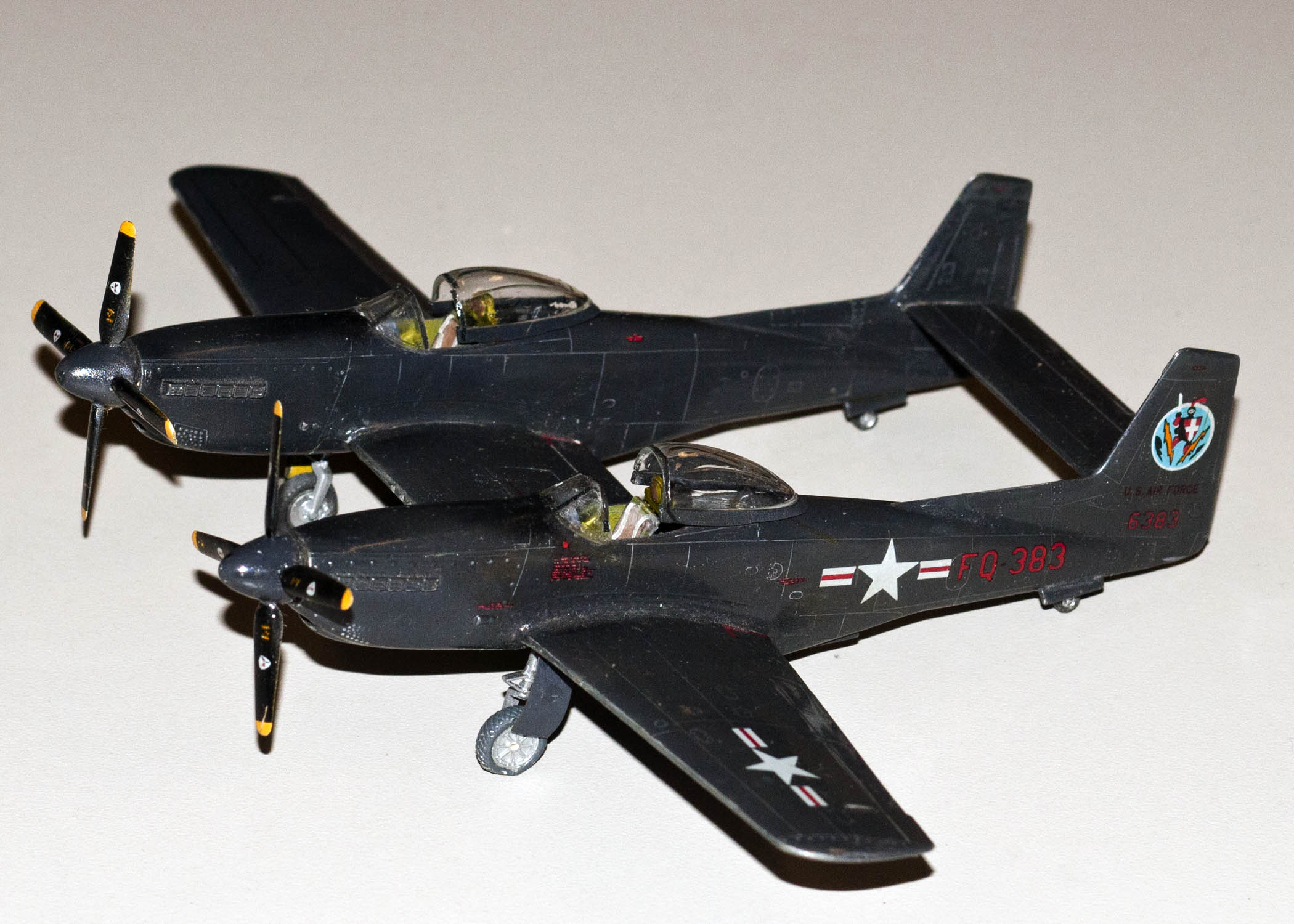
F-82G Twin Mustang, 1/72nd, Monogram, built by Steve Kumamoto

2016-nov-meeting-15 2016-nov-meeting-16

68th FS. Markings represent the 1st air to air kill during the Korean War, downing a YAK 11. The 1st 3 enemy a/c shot down in the Korean War were by 68th FS F-82’s.

Prototype XP-82s, P-82Bs and P-82Es retained both fully equipped cockpits so that pilots could fly the aircraft from either position, alternating control on long flights. Later night fighter versions kept the cockpit on the left side only, placing the radar operator in the right position.

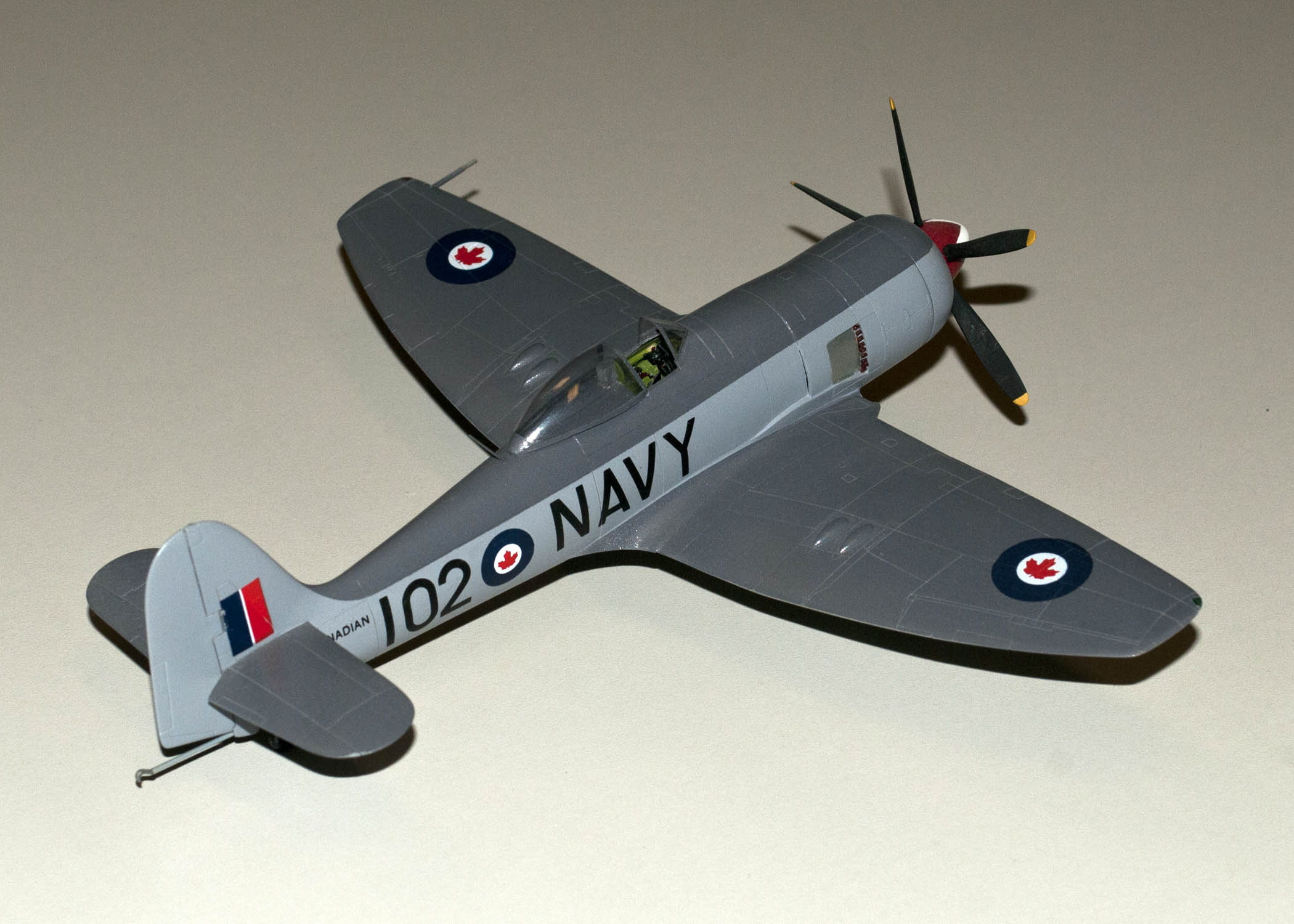
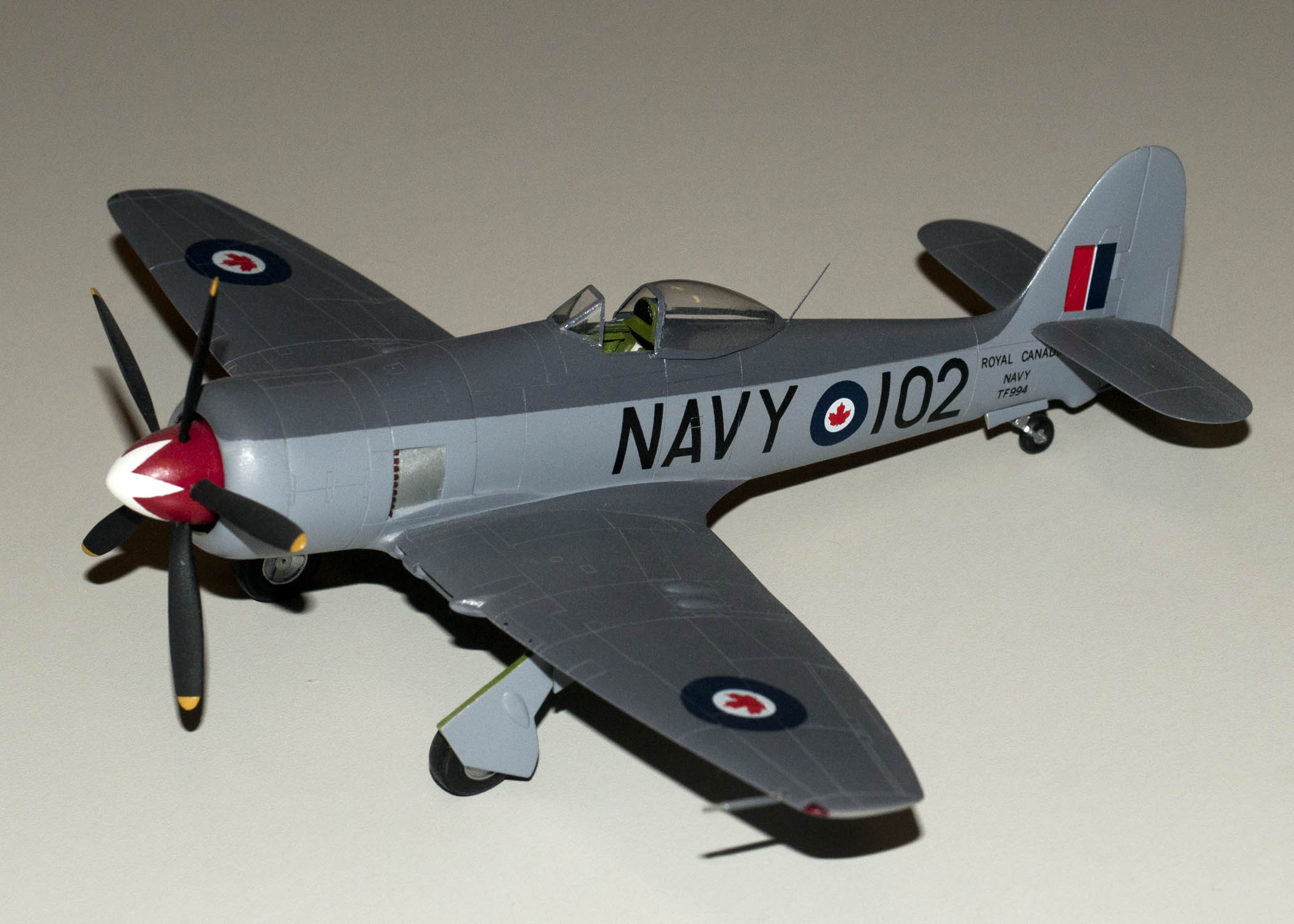
Sea Fury, 1/72nd, Hobbycraft, built by Charlie Scardon

2016-nov-meeting-17 2016-nov-meeting-18

Gunze Sangyo paint. Kit decals. Photo-etched metal included in the kit for antenna, cockpit details, and seatbelts. The wheel wells had very little detail.

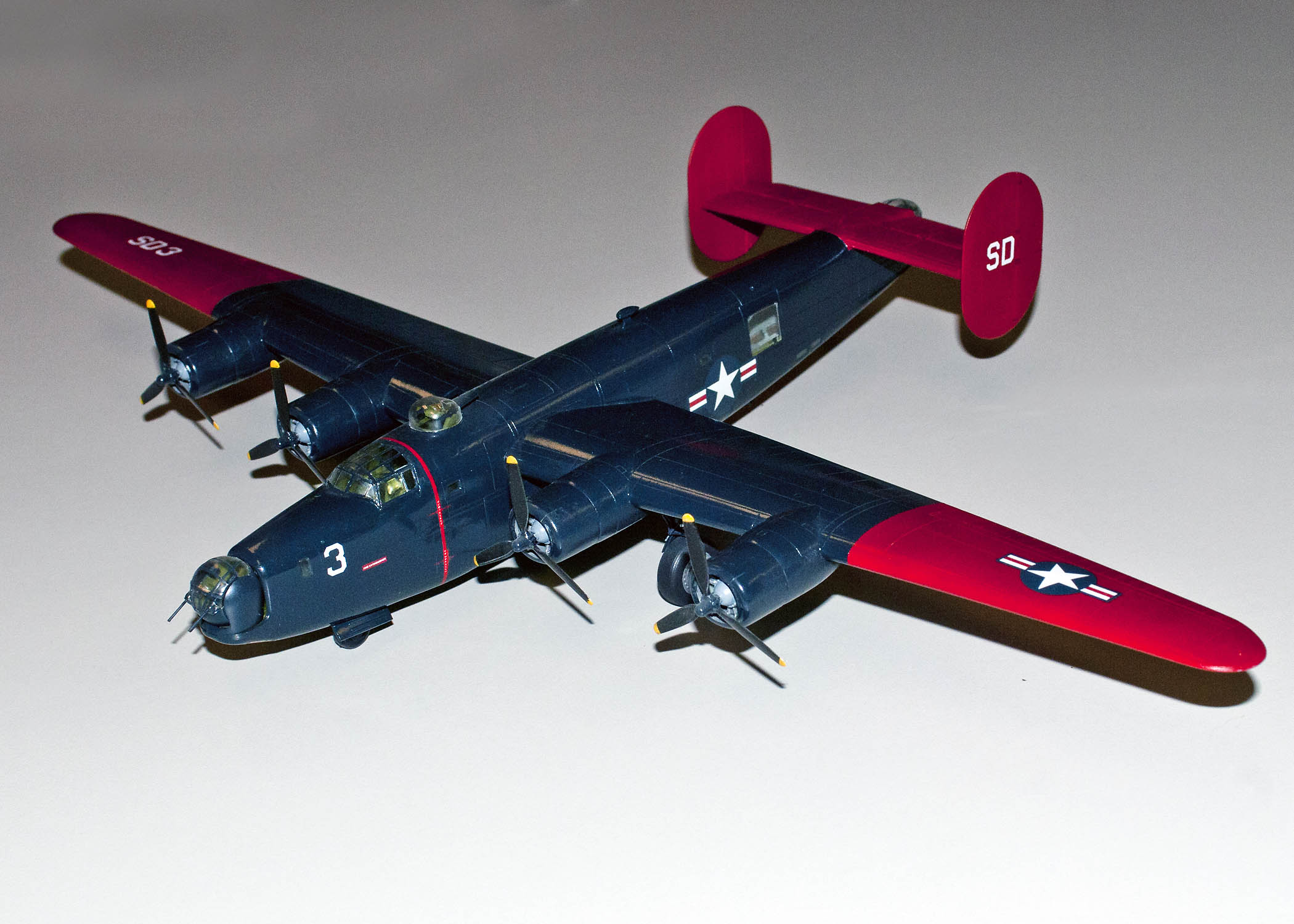
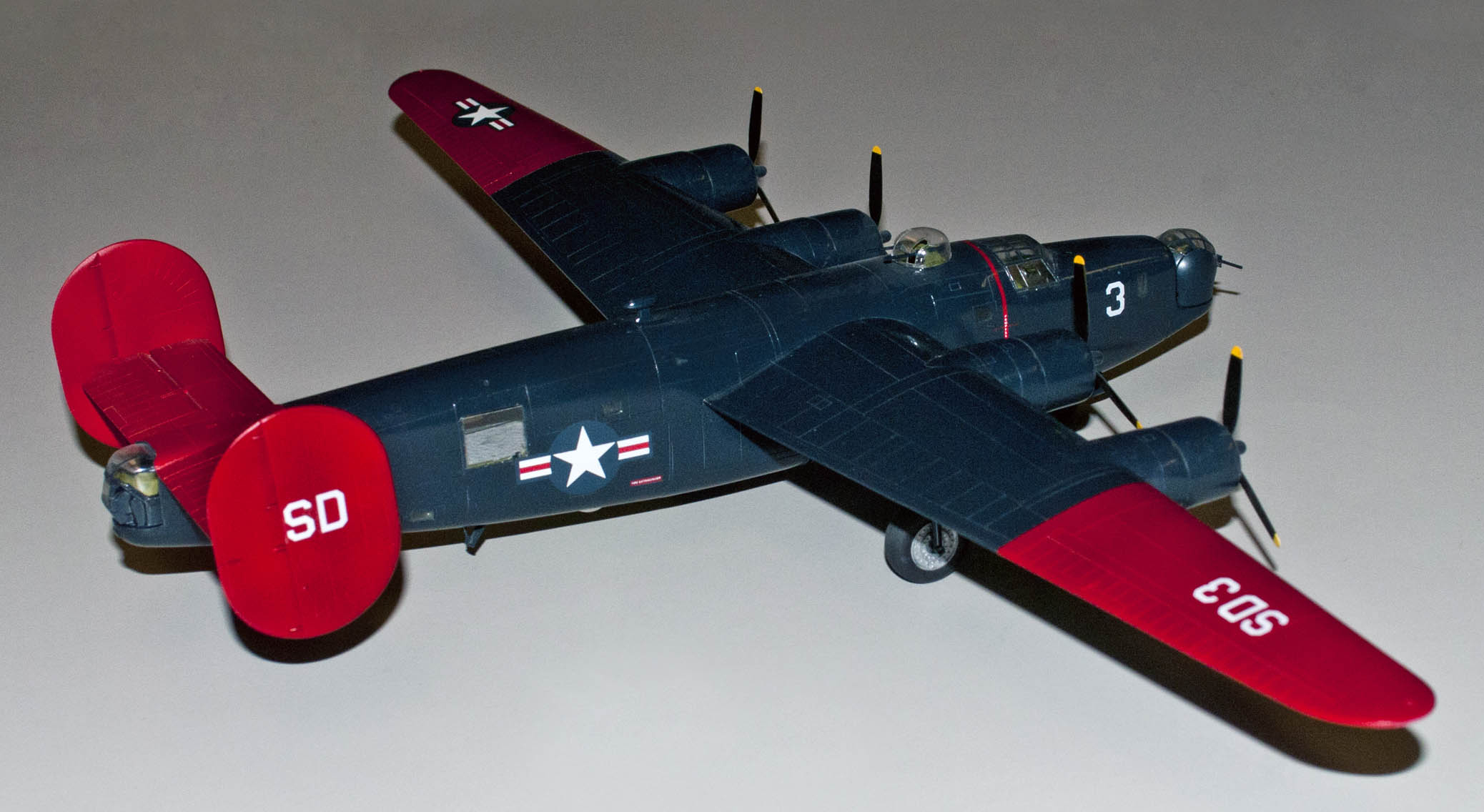
PB4Y-1, 1/72nd, Minicraft, built by Charlie Scardon

2016-nov-meeting-20 2016-nov-meeting-19

Built out of the box and in post war reserve markings for San Diego that sent to Alaska on a special deployment (hence the red high-visibility paint). Decals were from a variety of Superscale sheets. See Charlie’s kit review for additional background on the kit and Charlie’s build.

Posted in Contests, Recaps and Photos | Leave a comment

Minicraft PB4Y-1 Liberator in 1/72nd scale

Minicraft PB4Y-1 Liberator in 1/72nd scale

by Charlie Scardon

2016-nov-pb4y-review-01


The Minicraft PB4Y-1 kit has been around for some time now and is one of five versions they offer. It was the best B-24 available until the advent of the Hasegawa kit. Minicraft tooled up 5 different nose sections to give the modeler the many options. Other than that, the remaining parts are the same.

What is a PB4Y-1? It is any type of Liberator the navy used regardless of US Army designation. Except for one aircraft (42-78271) all were built by Consolidated at their San Diego plant.

2016-nov-pb4y-review-02

2016-nov-pb4y-review-03

The kit is molded in light grey and clear plastic. The moldings are crisp with only one exception. One propeller hub lacks the detail of the others. I think they failed to finish that one. The other downfalls of the kit are the slightly undersized and tapered engine cowlings, an extra panel line running the entire length of the aft fuselage halves, and the rear turret has a seam running through the glass. At some point, the thrust line was interpreted as a panel line. It is an easy fix to fill it with .010 rod and MEK. Sand it smooth and rescribe the vertical lines. The cowlings are tougher. Short of replacing them I do not have a repair for them. A company called Ron’s Resin used to make cowls for the kit. I purchased a set, and discovered the size problem everyone was having a cow about is not really all that much. But that is modelers. On a built up kit, it is not really that noticeable. Like the 1/48 Monogram B-24 the rear turret has a seam through the Plexiglas. Squadron makes replacement canopy sets for this. The rear turret is a A6A, Squadron B-24D canopy set has the required part.

I decided to make a post-war reserve plane from San Diego in the Arctic markings. The post-war planes had enclosed waist guns. I cut the opening so it was a rectangle. The gun mounts were made out of round rod and the glass was plastic from a Dannon yogurt container.

2016-nov-pb4y-review-04

I used the Squadron canopies. I used my tried and true method of pouring hydrocal into the cavity to reinforce the plastic while I cut them out. The parts were painted before they were cut out. I used Model Master Gloss Sea Blue, for the main coat. The red areas were first painted white and then given a coat of Insignia Red. I had to cobble together decals from a variety of old Super Scale sheets. Good luck with that now, they are very hard to find.

Overall it is a good kit. It has a lot of potential. I have found at least ten different ways to paint them for just operational aircraft. There are a number ways to paint up hacks also.

2016-nov-pb4y-review-05

Posted in Kit Reviews | 1 Comment